The Signal
On-chip dissipation gives qubits a 48.1-nanosecond reset time
Researchers measured a median reset time constant of 48.1 nanoseconds across 20 superconducting qubits using on-chip resistive loads. A separate 400-nanosecond pulse reduced leakage from a higher state on one qubit.
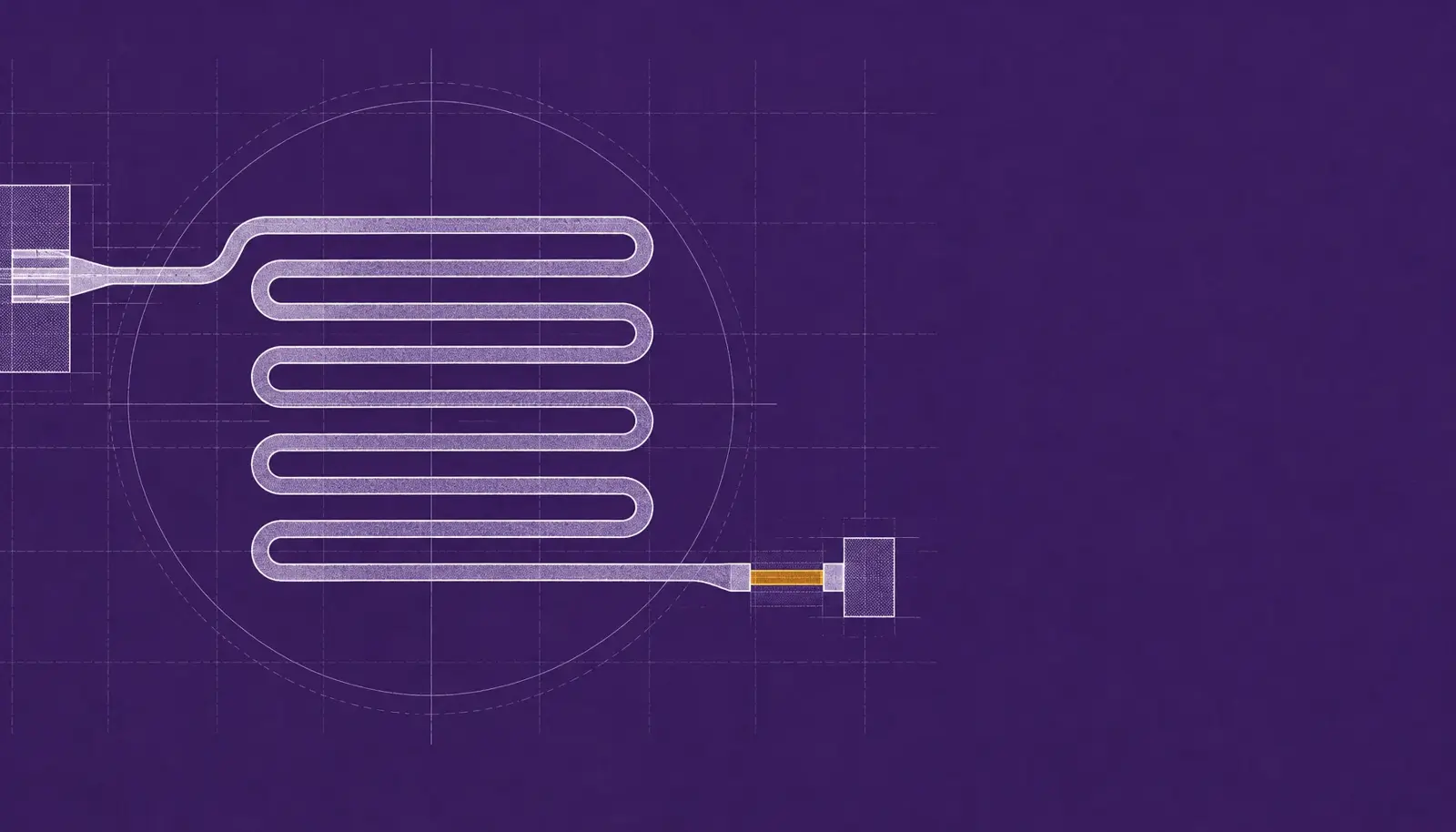
On-chip resistive loads helped superconducting qubits reach a median reset time constant of 48.1 nanoseconds, researchers report in a preprint. The result, reported for the ground-to-excited-state transition, comes from measurements of 20 operational qubits on a 72-qubit test processor.
Source arxiv.org
A 400-nanosecond reset pulse left median excited-state populations of 0.29% and 0.67% for qubits prepared in the ground and excited states, respectively. The authors also tested removal of leakage into a higher state on one qubit. They posted the preprint on November 10.
Resonators and resistive loads
Conventional superconducting-qubit reset protocols often use dissipative elements connected to external circuitry, exposing qubits to thermal noise from warmer environments. The authors say their architecture isolates the qubits from that circuitry while providing Purcell protection.
Each qubit is capacitively coupled to a dedicated dissipative resonator. Six resonators share a reset transmission line terminated at both ends by nominally matched resistive loads.
During reset, a flux pulse tunes a qubit into resonance with its dissipator. The resonator loses energy to an on-chip resistive load. The device does not require additional reset-specific cryogenic ports or control requirements, the authors report.
Measuring the reset
The reported distributions combine measurements from 20 analyzed qubits across seven reset lines. Preparation, reset and readout were performed in groups to reduce crosstalk.
The researchers obtained the reset time constant by fitting the excited-state population as a function of time at each hold frequency. They report a median relaxation time of 24.6 microseconds off resonance, compared with 48.1 nanoseconds during reset. The time constant is distinct from the duration of the pulse used for the separate reset-performance measurements.
For the 400-nanosecond pulse, the team used single-shot readout with and without reset, taking 8,192 shots per prepared state per condition. For qubits prepared in the ground state, the median probability of assignment to the excited state fell from 0.70% without reset to 0.29% with it, according to the measurements. For those prepared in the excited state, the corresponding median fell from 94.74% to 0.67%.
The team defines reset efficiency as the fractional reduction in excited-state assignment probability for qubits prepared in the excited state. By that measure, the median across the qubits was 99.28%.
Temperature and model limits
The authors estimated an effective bath temperature of 30.6 millikelvin at the reset frequency, assuming the assigned fractions approximate thermal populations. That interpretation assumes equilibration during reset, negligible readout bias and negligible population changes before readout.
The measured median reset lifetime of 48.1 nanoseconds differed from the model-predicted median of 28.9 nanoseconds for the same 20 qubits. The authors say dephasing and residual flux-pulse distortions, which were omitted from the coupled-mode fit, may contribute to the discrepancy.
Removing leakage
The leakage-removal experiment used a qubit identified as Q0, prepared in the higher f state. A 400-nanosecond flux pulse brought its f-to-e transition into resonance with the dissipator.
After preparation in the higher state, the probability of assignment to that state fell from 77.54% without the pulse to 0.51% with it, the authors report. Most post-pulse assignments were to the excited state. Assignments to the ground state rose from 3.52% without the pulse to 18.36% with it, which the authors say may reflect additional relaxation during the pulse sequence.
Source
Related stories
- Simulations test faster fluxonium gates using picosecond pulses
- Rigetti says 108-qubit system reached 99.5% gate fidelity
- Researchers couple atom array to fiber cavity in networking study
- Florida Atlantic wins $3 million for quantum sensor training
- Researchers report 2.57-fold signal-to-noise gain in hBN magnetometry