The Signal
Rigetti says 108-qubit system reached 99.5% gate fidelity
Rigetti says its Cepheus-1-108Q system achieved 99.5% median two-qubit gate fidelity. The company also reported higher fidelities on two smaller sublattices and outlined targets for larger systems.
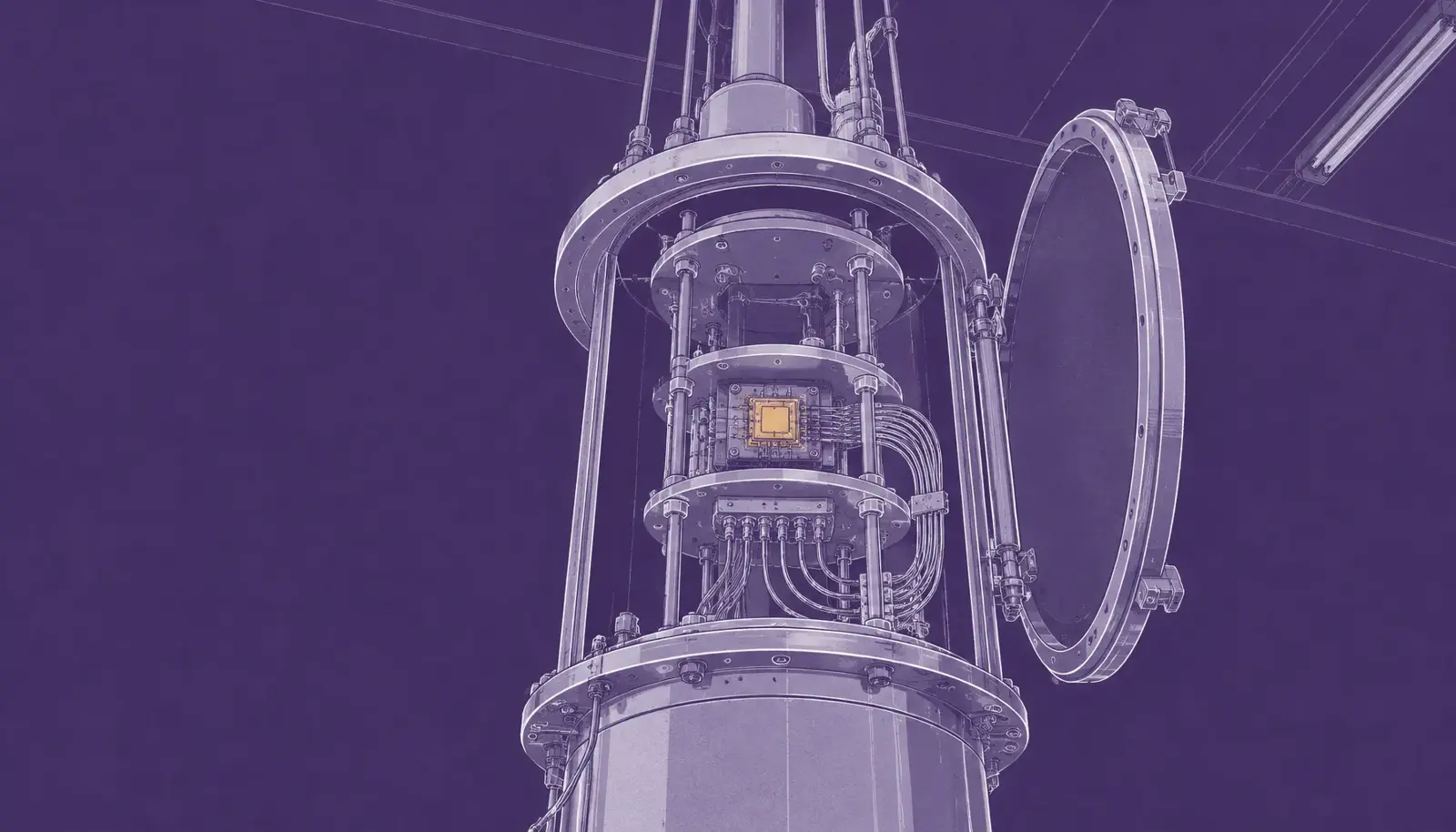
Rigetti Computing says its 108-qubit Cepheus-1-108Q system has achieved 99.5% median two-qubit gate fidelity, meeting a performance target for the superconducting quantum computer. The company disclosed the result in its November 10 third-quarter financial update.
On smaller portions of the system, Rigetti reported 99.6% median two-qubit gate fidelity on an 80-qubit sublattice and 99.7% on a 50-qubit sublattice. The superconducting system is built from 12 interconnected 9-qubit chiplets.
From launch to milestone
Rigetti made Cepheus-1-108Q generally available on April 7, 2026, through its Rigetti Quantum Cloud Services platform and Amazon Braket. At that launch, the company reported 99.1% median two-qubit gate fidelity, a gate speed of about 60 nanoseconds and 99.9% median single-gate fidelity.
The company had said it expected the system to reach 99.5% median two-qubit gate fidelity later in 2026. Rigetti attributes the performance improvement to work spanning chip design, materials, fabrication, calibration and system engineering, while retaining the modular architecture.
Targets for larger systems
Its next system target is more than 300 qubits, with approximately 99.7% median two-qubit gate fidelity and gate speeds below 60 nanoseconds by mid-2028. The company expects that system to have more qubits per chiplet, faster readout and expanded cryogenic capacity.
A longer-term target calls for a system with approximately 1,000 qubits, approximately 99.9% two-qubit gate fidelity and gate speeds below 50 nanoseconds within approximately three years. Rigetti believes that combination could provide a platform for demonstrating quantum advantage.
For that larger system, the plan is to increase qubit density in a single refrigerator rather than network multiple refrigerators together. The company has continued investing in dilution refrigeration capacity and supporting infrastructure for higher-qubit-count systems.
Research funding and finances
Rigetti signed a definitive agreement with the U.S. Department of Commerce in September 2026 for an award of up to $100 million under the CHIPS Research and Development Office Broad Agency Announcement pursuant to the CHIPS Act. The award supports work on miniaturized readout electronics, expanded cryogenic capacity through a new cryostat architecture, and fabrication capabilities for high-connectivity chip architectures.
The department received a minority, non-controlling equity stake in Rigetti as a condition of the award.
Alongside the technology update, Rigetti reported $1.4 million in revenue and a $33.2 million operating loss for the three months ended September 30, 2026. It expects approximately $20 million in revenue for the full year, assuming C-DAC customer acceptance and associated revenue recognition in the fourth quarter.
Sources
Companies in this story
Related stories
- QSolid Tests Its 30-Qubit Processor as 10-Qubit System Opens Access
- Preprint reports Rigetti processor simulation of inner-product change
- Rosetta Audit Finds Quantum Roadmaps Slip Up to Three Years
- Horizon Quantum says multiplexing cuts ZZ crosstalk characterization experiments on a 100-qubit processor from about 5,000 to 7
- Pasqal tests HRES scheduling for hybrid QPU jobs