The Signal
Researchers report coherent photon reflection from a quantum-dot waveguide
A semiconductor quantum dot in a tapered nanowire reflected single photons coherently in an experiment reported in Nature Communications. An earlier manuscript describes how the team matched the incoming light to the waveguide and measured the reflected signal.
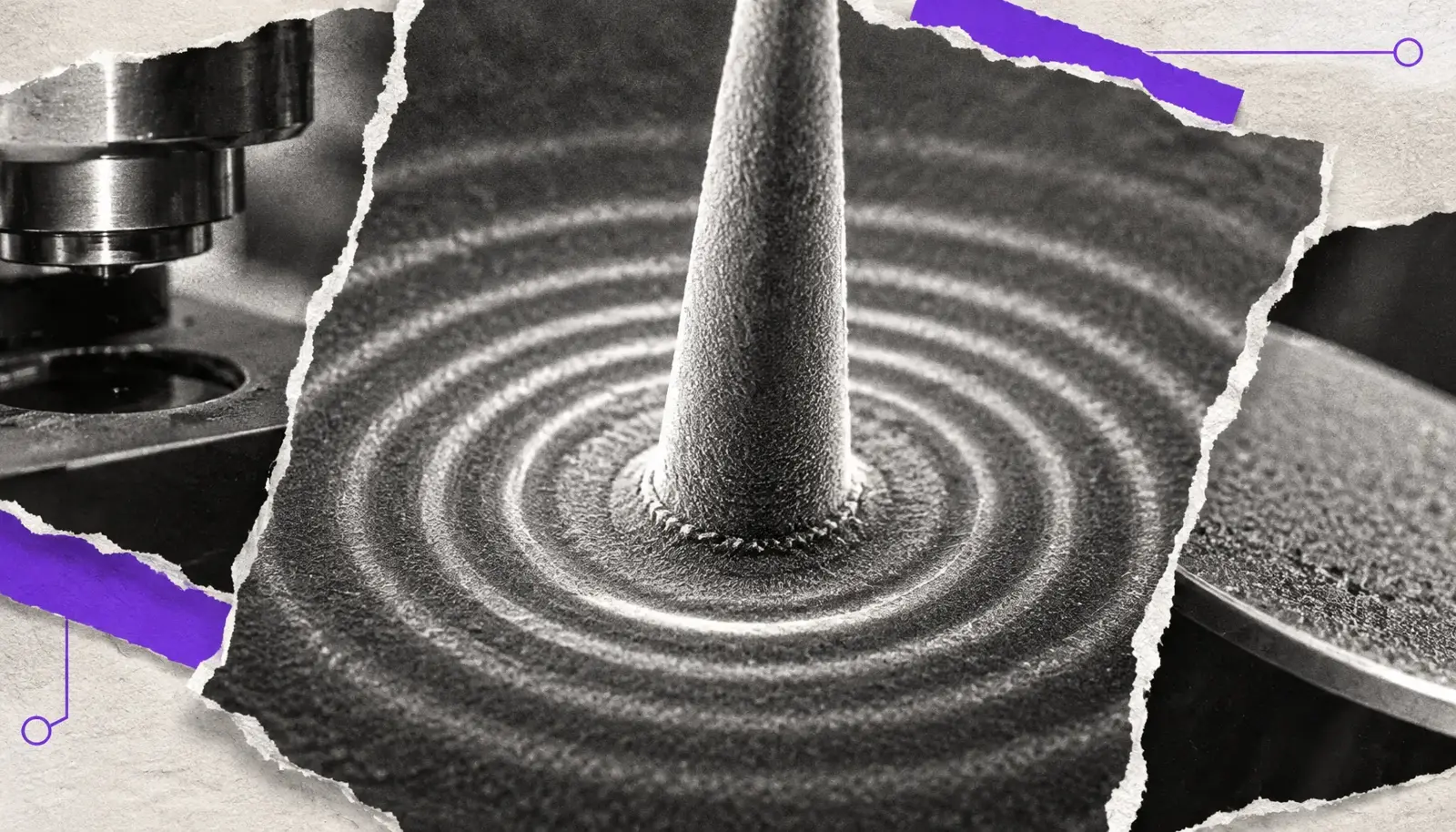
A semiconductor quantum dot embedded in a nanowire has reflected single photons coherently in an experiment that separates the returning signal from stray light. Nature Communications published the peer-reviewed research on November 11 as an accepted article subject to further editing before the final version of record.
The journal identifies Tarun Patel and Matteo Pennacchietti as equal contributors to the work. Their team included researchers affiliated with the University of Waterloo, National Research Council Canada and Queen’s University.
Matching light to the wire
The device places an indium arsenide phosphide quantum dot on the axis of an indium phosphide nanowire waveguide. The wire tapers toward its tip, providing a way to match the incoming light to the waveguide mode coupled to the dot.
That matching is central to the experiment’s approach to the reflected signal. According to the paper, accessing the reflection port has been difficult because stray electromagnetic fields that do not interact with the emitter can also reach it. The team used an extinction technique in a vertical arrangement to establish the match between the input light and the nanowire.
The earlier manuscript describes an optical arrangement in which a lens focuses the input laser on the nanowire and collects light returning from it. A collection fiber accepts the desired light mode; unwanted components of the back-scattered light are not collected. The researchers say this spatial filtering suppresses the input laser signal without requiring cross-polarization filtering.
What the measurements showed
The earlier manuscript says the sample was kept at 4.5 K in a cryostat. From agreement between the experiment and a model, the researchers estimated that about 95% of the input Gaussian beam coupled to the fundamental waveguide mode. That figure describes coupling into the mode, rather than the fraction of incoming light reflected by the dot.
To test the reflected light, the team measured its photon correlations and spectral response as it varied the input drive. The researchers report an antibunching dip in the reflected signal, a signature of suppressed simultaneous photon detections. They also compared the signal’s spectrum with the response of their measuring instrument.
At low input power, the reflected signal had the same frequency and a similar spectral linewidth to the excitation, while its photon statistics were non-classical, the researchers found. At higher drive, they observed a significant amount of incoherent emission. The manuscript describes the low-power behavior as a quantum mirror.
Limits and applications
The researchers also found that charge noise broadened the measured reflection line. They used a weak additional laser to reduce that noise and obtain a more stable response. The manuscript says that obtaining Fourier-limited linewidths for proposed applications will require control over the charge environment around the dot.
The authors link the work to nonlinear optics at the few-photon level and to deterministic gates for photonic quantum computing. They also describe proposed uses involving resource states for photon-based quantum computing. Those applications are distinct from the reflection experiment reported in the paper.
Sources
Related stories
- MoTe₂ preprint reports about 7.1% photon interference, up to 60% after filtering
- Silicon Cavity Records 1.29 Million Photon Counts per Second
- Paderborn team demonstrates quantum-dot entanglement swapping
- PRX Quantum paper demonstrates phase-controlled photon routing
- Spin Injection Linked to Two-Photon Fluctuations in Quantum Dots