The Signal
PRL paper uses cavity photon loss to sense qubit noise
A Physical Review Letters paper describes measuring superconducting-qubit frequency noise through photon loss in a coupled cavity. The researchers report an upper bound on the noise power spectral density at a detuning of 508 MHz.
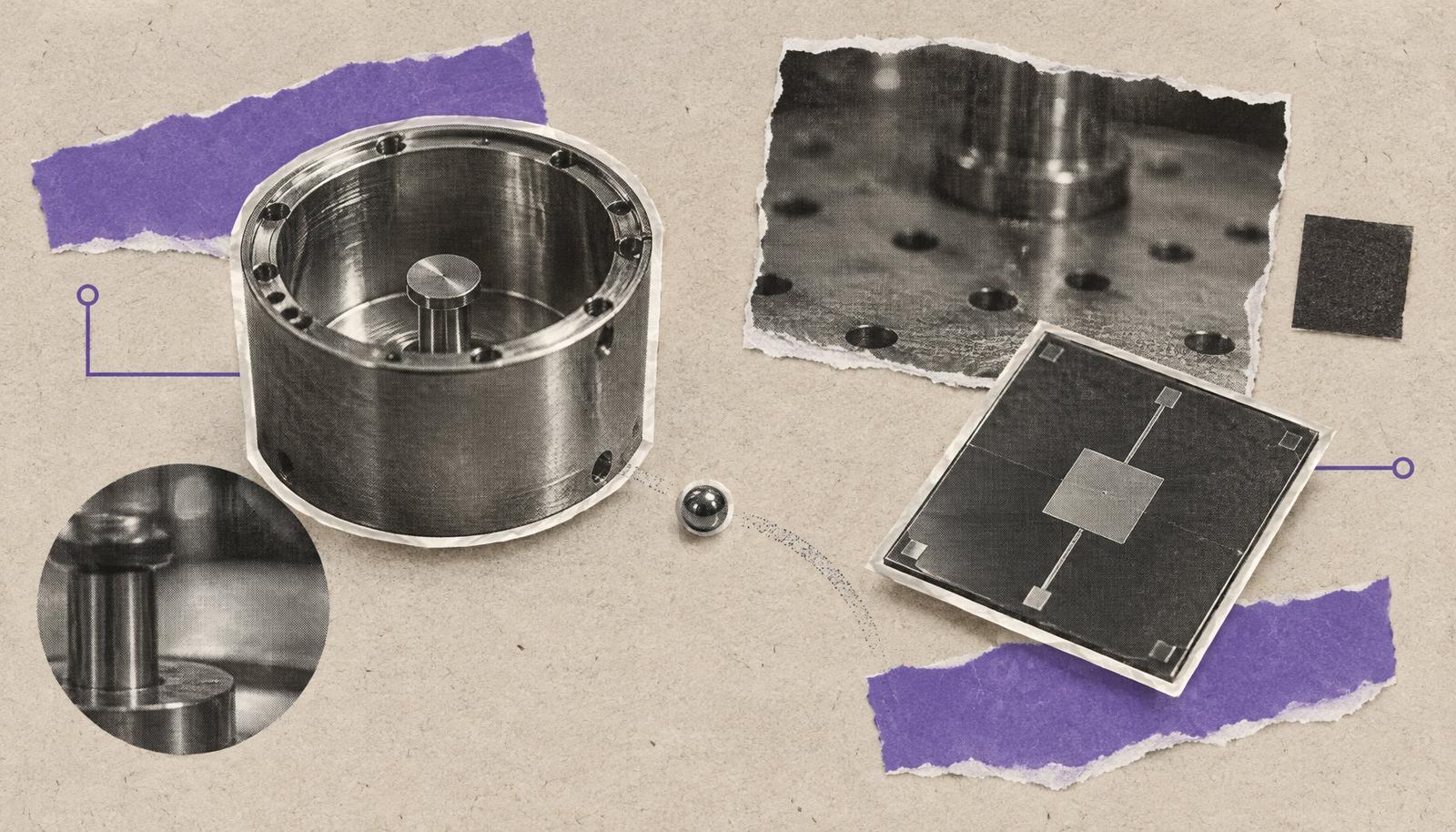
Turning noise into a measurable loss
A superconducting cavity can reveal qubit frequency noise by recording the photons that noise removes, according to a paper published in Physical Review Letters. The journal published the paper on November 13, 2026; its authors are Nitzan Kahn, Dror Garti, Uri Goldblatt, Lalit M. Joshi, Fabien Lafont and Serge Rosenblum.
Source journals.aps.org
The method relies on dressed dephasing: frequency fluctuations in a qubit can drive energy exchange between the qubit and a coupled cavity, creating an additional route for a cavity photon to be lost. The team’s protocol prepares a single photon in the cavity, repeatedly measures the qubit during the cavity’s evolution, and compares photon-survival data with and without selecting runs in which each qubit measurement returned the ground state.
That selection is intended to separate noise-related loss from the cavity’s intrinsic decay. When a photon transfers its excitation to the qubit, a later measurement can detect that event; runs with a detected qubit excitation are excluded from the selected dataset. Comparing the selected and unselected decay curves lets the researchers estimate the added loss associated with qubit noise.
Testing the measurement
The researchers tested the protocol by injecting controlled frequency noise into the qubit. They report that the extracted loss increased in proportion to the added noise power at higher noise levels, as predicted by their model. The experiment used a transmon coupled to a three-dimensional superconducting cavity whose single-photon lifetime was 11.3 milliseconds.
In one test with injected noise, the cavity’s measured single-photon lifetime fell to 3.2 milliseconds from 11.3 milliseconds. The researchers also observed a temporary increase in the qubit’s excited-state population, which they interpret as evidence that the cavity excitation had transferred to the qubit. They report that the excited-state population reached 2.9%, compared with a measured thermal population of 2.3% without the injected noise.
An upper bound at 508 MHz
With no added noise, the paper places an upper bound of 0.70 × 10³ rad2/s on the intrinsic qubit frequency-noise power spectral density at a cavity-qubit detuning of 508 MHz.
The authors say the cavity-based method can probe a higher-frequency range than standard qubit-based spectroscopy and may enable noise measurements while a qubit is being strongly driven. Their paper describes the technique as a way to measure noise through its effect on cavity photons rather than using the qubit itself as the sensor.
Sources
Related stories
- Chalmers Team Uses Parasitic Capacitances to Cut Qubit Crosstalk
- Nature Physics paper reports 18% longer autonomous qubit lifetime
- Diamond spin spirals sustain collective dynamics, paper reports
- Researchers report 2.57-fold signal-to-noise gain in hBN magnetometry
- Study models qubit sidebands as a fingerprint of antibunched light