The Signal
Nature Physics paper reports 18% longer autonomous qubit lifetime
A cavity-encoded logical qubit lasted about 2.0 ms with autonomous error correction, exceeding the best physical qubit in the same system by 18%, the paper reports. The team also used the protocol to measure a small frequency shift, reporting a 6.3 dB metrological gain over a Fock-state superposition.
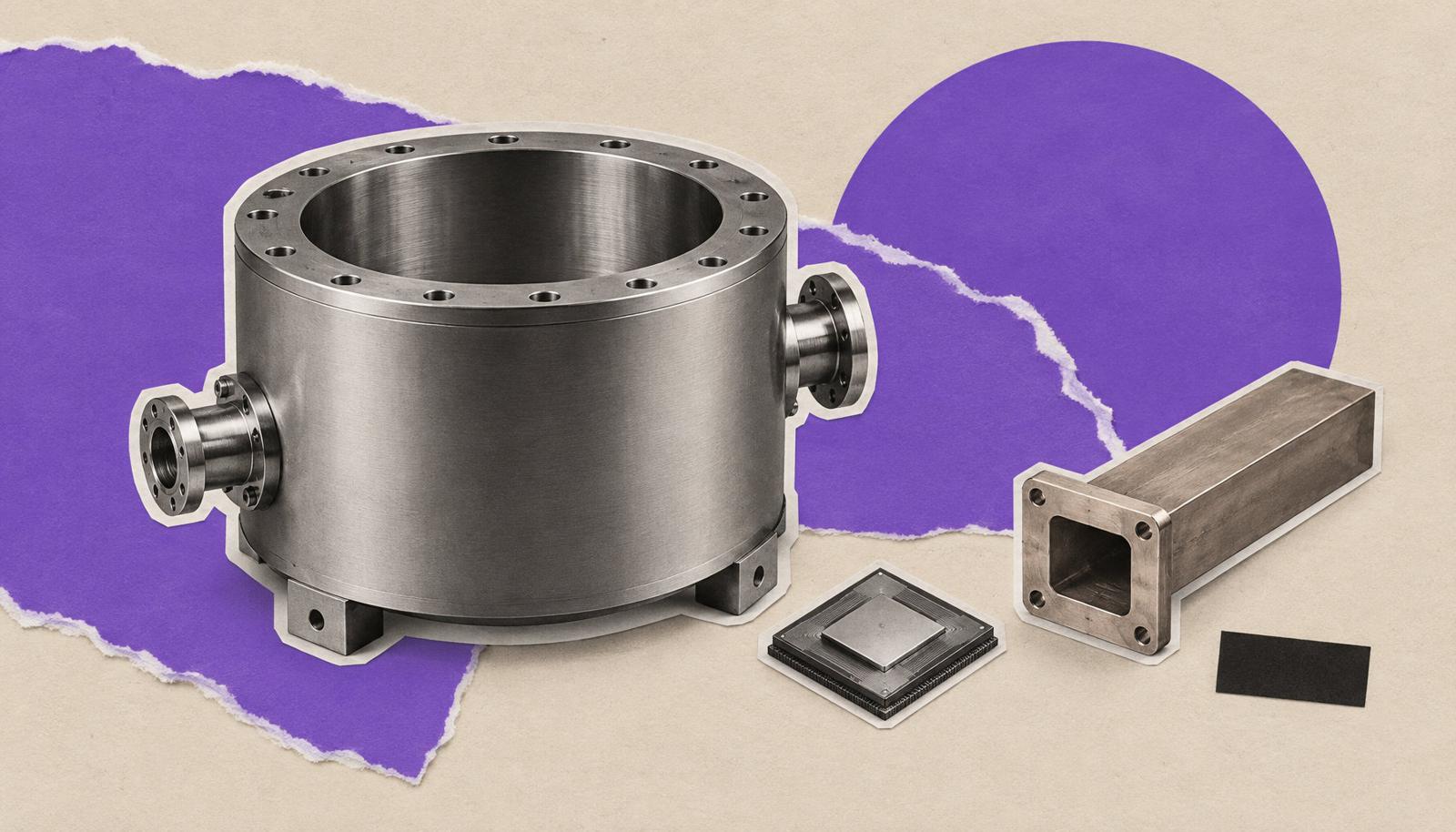
A cavity qubit crosses the threshold
A cavity-encoded logical qubit lasted about 2.0 ms with autonomous error correction, 18% longer than the best physical qubit in the same system, according to a Nature Physics paper published on November 16. The experiment encoded a photonic logical qubit in a superconducting microwave cavity and used engineered dissipation to protect it against photon loss.
The paper defines break-even as a logical qubit lasting longer than the best physical qubit available within the same system.
Correction without repeated feedback
In conventional active quantum error correction, a system measures an error syndrome and applies an adaptive correction. The autonomous approach described in the paper is designed to avoid that repeated measurement-and-feedback process, instead using engineered dissipation to counter photon loss.
The experiment used a 3D microwave cavity made from high-purity aluminum, configured as a coaxial stub resonator. A superconducting chip integrated a transmon ancilla qubit and a lossy resonator; the paper’s figure captions describe reservoir engineering for resetting the ancilla. The cavity encoded the logical qubit, while the correction protocol protected its stored state against photon loss.
The authors include Zhongchu Ni, Ling Hu, Yanyan Cai, Yuan Xu and Dapeng Yu, with affiliations including the International Quantum Academy and Southern University of Science and Technology. The paper’s contribution statement says Ni performed the experiments under Xu’s supervision.
A separate code test and a sensing result
The article also reports a separate repeated-correction test using a bosonic sqrt(17) code. In that test, the protected logical lifetime was about 1.75 ms—nearly 2.2 times the lifetime of the unprotected code and about 2% beyond break-even, according to the paper’s extended data.
The team also used its protocol to measure a small frequency shift. The paper reports a metrological gain of 6.3 dB relative to the most robust Fock-state superposition used as the comparison.
The study presents the lifetime and sensing results as demonstrations of autonomous error correction in a circuit quantum electrodynamics system. Data and code for the study are available from the corresponding authors upon reasonable request, the paper states.
Source
Related stories
- Researchers report bosonic qubit coherence beyond break-even
- Diamond spin spirals sustain collective dynamics, paper reports
- PRL paper uses cavity photon loss to sense qubit noise
- Preprint reports proton sensing with silicon-carbide nanopillar arrays
- UKRI backs Bonato project for real-time quantum-sensor experiments