The Signal
IBM Says ORNL, IBM and AMD Deployed a Quantum Error-Correction Platform
IBM says the Quantum Science Center at ORNL, IBM and AMD have deployed a quantum error-correction co-design platform at IBM’s site in Poughkeepsie, New York. IBM says the platform combines IBM Quantum Nighthawk r2 processors with ORNL’s Umbra HPC system, powered by AMD GPUs and CPUs.
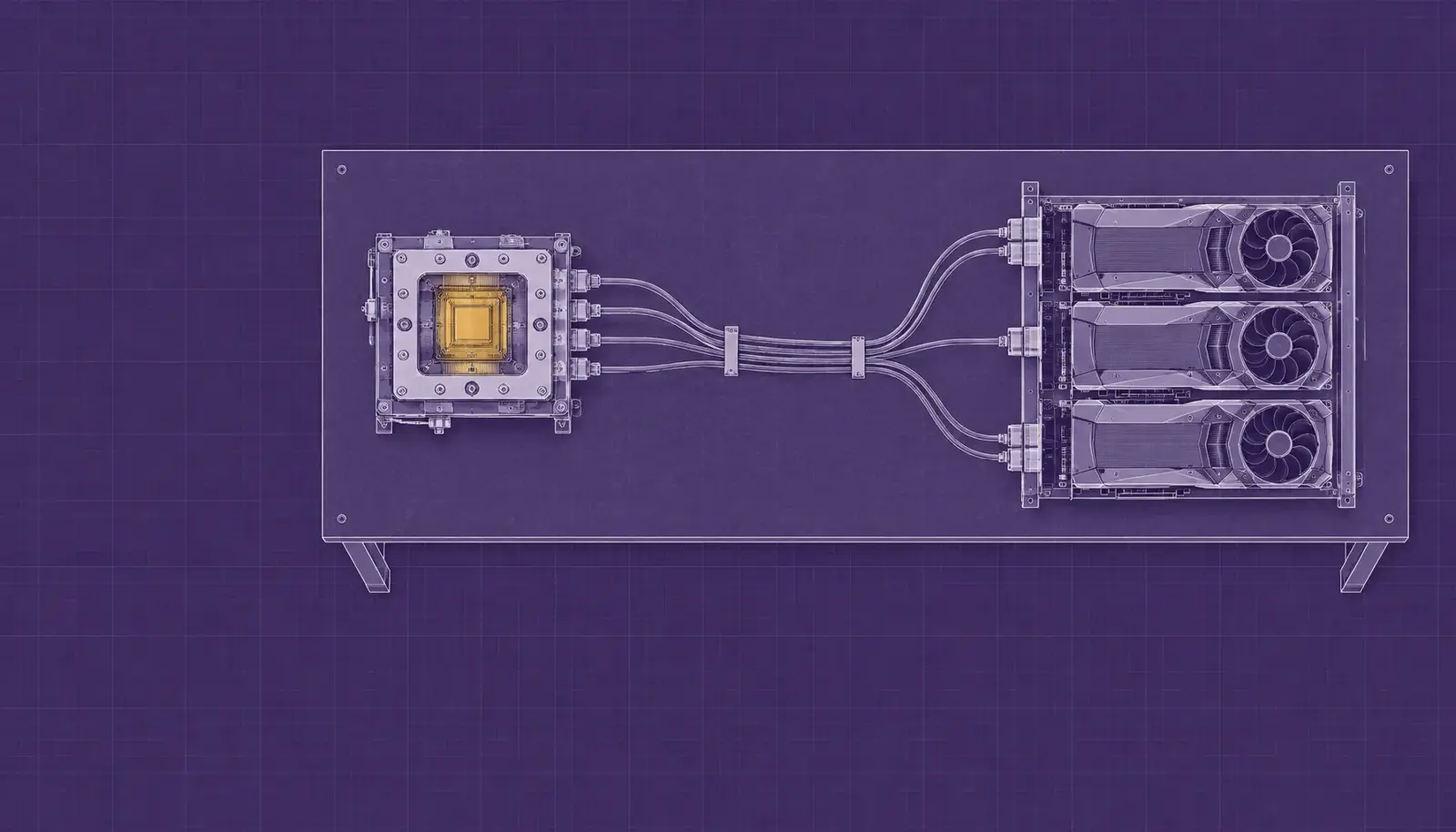
A shared QEC platform in Poughkeepsie
IBM says the Quantum Science Center (QSC) at Oak Ridge National Laboratory (ORNL), IBM and AMD have deployed a quantum error-correction co-design platform at IBM’s site in Poughkeepsie, New York. The QSC, a U.S. Department of Energy center at ORNL, is leading the integration of IBM quantum hardware with ORNL high-performance computing clusters powered by AMD. QSC and AMD are the platform’s inaugural partners. The system pairs IBM Quantum Nighthawk r2 processors with Umbra, QSC’s high-performance computing system, in one co-located environment linked to ORNL’s broader supercomputing ecosystem.
IBM says researchers can use the platform to develop and validate quantum algorithms, workflows and applications for hybrid HPC-quantum computing environments without building the infrastructure themselves. IBM says the platform handles that infrastructure so researchers can concentrate on algorithm discovery. Its intended users can test quantum-classical workflows with the classical computing those workflows require.
Decoders and low-latency classical computing
IBM says quantum error correction protects qubits by spreading information across many qubits and running repeated checks for signs of errors. A classical computer reads the data from each round of checks and works out which errors occurred; the software that performs that task is called a decoder. IBM says the decoder has to keep pace with the quantum processor, making the work computationally demanding.
Quantum computers and high-performance computing systems currently rarely sit together or connect directly, according to IBM’s account of research workflows. Researchers working on hybrid workflows often reach a quantum computer through the cloud, run classical work elsewhere and link the systems through separate application programming interfaces. IBM says every handoff adds complexity and delay, limiting the experiments researchers can run. The co-design platform places classical computing beside the quantum processors for low-latency quantum-classical execution.
Nighthawk r2 and Umbra hardware
IBM says Nighthawk r2 provides square-lattice connectivity, the highest connectivity of any IBM quantum processor architecture today, along with high circuit throughput and real-time pulse control. Researchers can measure qubits during a calculation, act on the results in real time and work with raw measurement signals. IBM says those capabilities let teams compare what error-correction methods require in qubits, time and classical computing.
On the classical side, IBM says Umbra combines ORNL’s AMD Instinct MI355X GPU accelerators with dedicated 5th Gen AMD EPYC CPUs. Researchers can use the GPUs to train and evaluate decoders at large scale and explore error-correction approaches that may make future systems more efficient. IBM and AMD’s existing collaboration also includes using AMD GPUs to accelerate sample-based quantum diagonalization and demonstrating efficient quantum error decoding on AMD hardware.
Layered codes and IBM’s Starling plans
One research direction IBM says the platform could support is hierarchical error correction, which layers two codes. An inner code protects qubits within a module, while an outer code surrounds the inner code’s logical qubits with a second layer of protection. The inner code’s logical operations supply the long-range connections the outer code needs, allowing the code to provide added protection while the chip stays simpler.
Recent IBM research found that this approach could reach a trillion logical operations at a physical error rate of one in a thousand. Hierarchical codes rely on powerful classical computing: decoding happens at each layer, and results from one layer feed into the next. The platform gives researchers a place to develop and test those ideas with GPUs in a low-latency environment.
IBM says the platform aligns with the U.S. Department of Energy’s Genesis Mission, which aims to deploy a scientifically relevant quantum computer by 2028. Experiments have run up to 70 logical qubits through 438 difficult operations, while the Genesis Mission’s Q Competition targets 100 logical qubits running 100,000 such operations by late 2028. IBM says work on the platform will inform development of IBM Quantum Starling, the fault-tolerant quantum computer it plans to deliver by 2029.