The Signal
Niels Bohr Institute Center Validates SemiQon’s Cryogenic CMOS Demultiplexers for Spin-Qubit Work
The Novo Nordisk Foundation Quantum Computing Programme (NQCP) has validated SemiQon’s cryogenically optimized CMOS RF-demultiplexers toward spin-qubit measurement. The collaboration places SemiQon’s multiplexers inside NQCP’s spin qubit platform, close to the qubits, and NQCP researchers have also characterized SemiQon’s superconducting microwave/RF switch to assess its suitability for superconducting-qubit experiments.
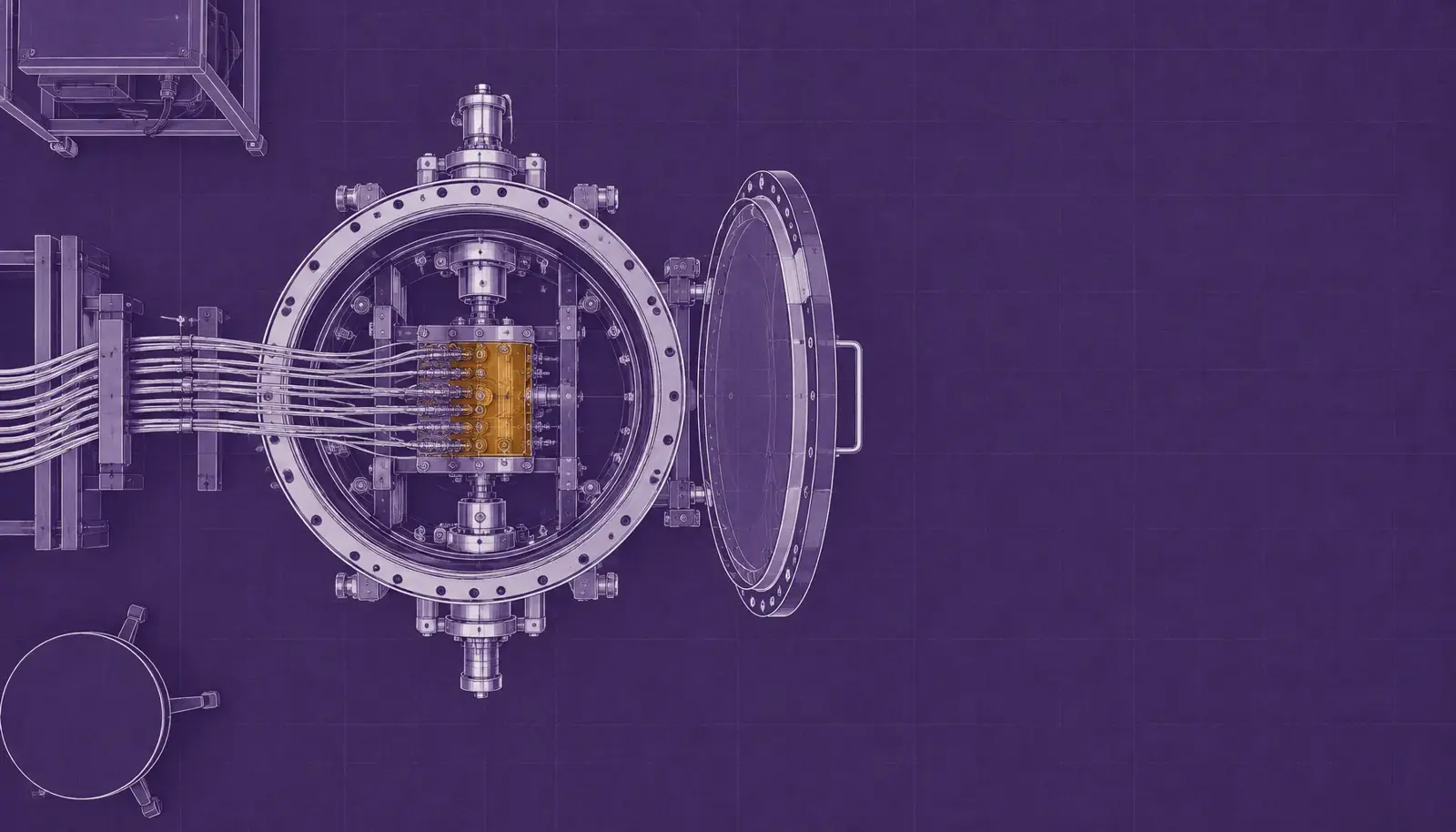
SemiQon says its first cryo-CMOS transistor achieves heat dissipation levels a thousand times lower than conventional room-temperature devices. The company also reports that the Novo Nordisk Foundation Quantum Computing Programme (NQCP) has validated SemiQon’s cryogenically optimized CMOS RF-demultiplexers toward spin-qubit measurement.
SemiQon says the multiplexers would enable more qubits to be measured in a single cooldown.
The port bottleneck is one of the practical barriers to measuring more qubits per cooldown
A useful quantum computer must read out many qubits at once, using control and readout electronics that may operate at temperatures near absolute zero. A dilution refrigerator has only a limited number of microwave and RF ports, yet each qubit depends on wiring to function. SemiQon says the port bottleneck is one of the practical barriers to measuring more qubits per cooldown.
The collaboration first started in October 2025. SemiQon has delivered multiplexer chips for use within the NQCP Spin Qubit Pilot Line, and NQCP has committed to providing validations for the technology in the scientific community.
“When chips must be cooled one at a time, the process to characterize and to better understand the devices is very time consuming. Eventually, our goal is to validate several samples from a fab batch, or even an entire batch, simultaneously”
Dr. Francesco Borsoi, Assistant Professor and Spin Qubit Pilot Line Lead at the Niels Bohr Institute.
SemiQon’s cryogenically optimized CMOS devices have been delivered to two of NQCP’s research groups
The partnership covers semiconducting and superconducting technology, with SemiQon’s cryogenically optimized CMOS devices delivered to two NQCP research groups. NQCP is a key research center within the Niels Bohr Institute at the University of Copenhagen.
For the superconducting platform, first results from SemiQon’s superconducting microwave/RF switch have now been confirmed. A prototype of the switch was characterized to assess its suitability for superconducting-qubit experiments.
SemiQon says its first cryo-CMOS transistor launched in November 2024, and the technology is now commercially available. SemiQon says the transistor achieves heat dissipation levels a thousand times lower than conventional room-temperature devices, enabling control and readout electronics to sit directly inside a cryostat with minimal thermal disturbance.
Borsoi says the aim is to cool many devices at once
Borsoi says the aim is to cool many devices at once, allowing the researchers to reduce the time spent on characterization. In the first months, the researchers have designed their measurement platform around that approach.
SemiQon CTO Janne Lehtinen says the collaboration is still in its early stages and will show how the company’s technology performs in a real qubit setup, close to the qubits, at the cryogenic temperatures at which they operate:
“We are still in the early stages, but this collaboration will show how our technology performs in a real qubit setup, close to the qubits, at the cryogenic temperatures at which they operate,”
Janne Lehtinen, CTO of SemiQon.
The collaboration covers two different qubit modalities
NQCP’s mission is to develop fault-tolerant quantum computing hardware and quantum algorithms to tackle critical problems in life sciences. SemiQon says access to specialized hardware often allows research groups to avoid delays and focus on their core mission.
As the collaboration finishes its first year in September 2026, SemiQon and NQCP see room for the partnership to continue and to evolve. Conversations about the future are ongoing.