The Signal
IonQ says DARPA will test its quantum roadmap on hardware
IonQ says independent evaluators will test its quantum computing roadmap against results from real hardware in DARPA’s Stage C. Its agreement has a potential value of up to $300 million, with later funding subject to appropriations and agency action.
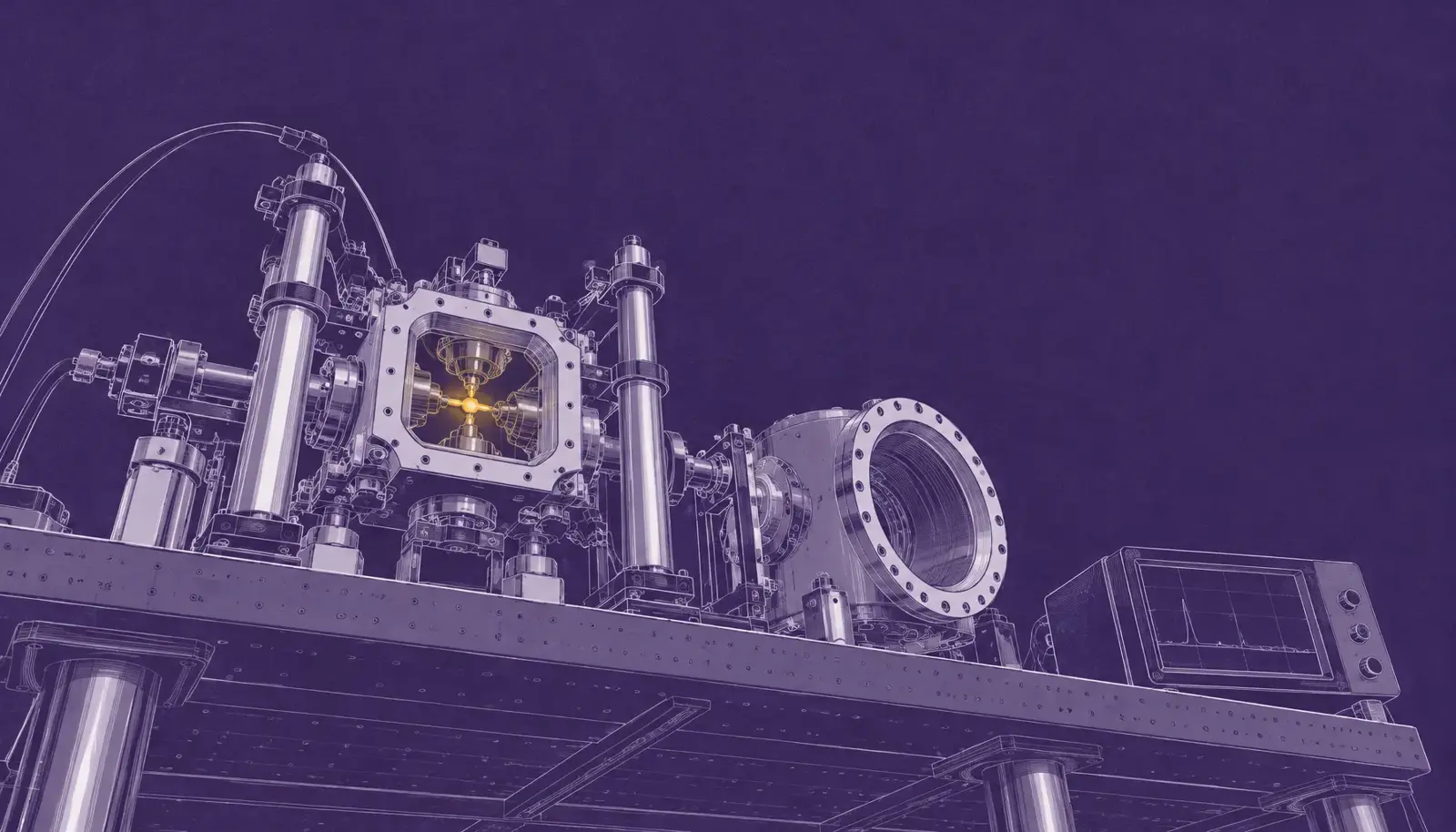
Independent evaluators will test IonQ’s quantum computing roadmap against results from real hardware in the final stage of DARPA’s Quantum Benchmarking Initiative. In a November 11 conversation published by IonQ, Rick Muller, chief scientist at IonQ Federal, described Stage C as the point at which companies must demonstrate that their technologies can deliver value.
The initiative seeks to determine whether a quantum computing approach can reach utility scale by 2033, meaning its computational value exceeds its cost. For IonQ, the review will cover successive generations of its Superion systems rather than a roadmap alone.
Agreement and funding
IonQ and DARPA signed a Stage C agreement with a potential value of up to $300 million, the company said when it announced its advancement on October 7. Funding beyond the initial obligation remains subject to future appropriations and DARPA funding actions.
Under the agreement, DARPA will independently evaluate multiple generations of Superion quantum computers through 2029, according to IonQ. The 2029 evaluation period is distinct from the initiative’s broader question of whether a utility-scale system can be built by 2033.
From roadmap to testing
In Stage A, IonQ defined a technical concept for a utility-scale machine. In Stage B, it developed a research and development roadmap covering technical requirements, designs and plans to mitigate risks. During both stages, the company shared prototype hardware data with DARPA.
Stage C brings government evaluators alongside participating organizations to test whether their proposed systems can ultimately be built as designed and operated as intended. Muller said the earlier roadmap included dates for reaching specified technology levels, with potential “no-go” conditions if those levels were missed.
He described independent testing as a way to assess different approaches against similar measures, including the cost of solving important problems. The companies’ approaches differ, he said, as do the metrics associated with technologies using photons, atoms or superconducting circuits.
IonQ’s technical path
IonQ uses trapped ions for its quantum computing approach. In an October 8 post, Muller wrote that the company had demonstrated trapped-ion two-qubit gates with fidelity above 99.99% in October 2025. The company also published Walking Cat in April 2026, an architecture intended to turn trapped-ion hardware into a fault-tolerant quantum computer.
In the November conversation, Muller described the architecture as an approach to fault-tolerant error correction. The company has also described work on optimizing and compiling Shor’s algorithm onto that architecture for the elliptic-curve discrete logarithm problem underlying Bitcoin’s ECDSA signatures.
Muller said that work was a resource estimate for a future machine, not an attack on cryptography. It connected an algorithm to a specific architecture to estimate what running the computation would require.
Other teams in Stage C
DARPA named IonQ alongside Atom Computing, Diraq and IBM as advancing to Stage C on October 7. They joined Microsoft and PsiQuantum, which had reached the stage after taking part in a pilot precursor to the initiative.
The agency said QBI is not intended to pick winners and losers, but to assess whether different approaches have credible paths to utility-scale operation. Since its launch in mid-2024, the initiative has evaluated over 20 companies pursuing a range of quantum computing approaches.