The Signal
SQS says quantum nodes are operational in Albuquerque and Mesa
Secured Quantum Services says four quantum-secure nodes are live in Albuquerque, New Mexico, and Mesa, Arizona. The company says quantum key distribution and quantum-assured timing are operating, while dual-layer encryption remains in integration.
Nodes live at two locations
Secured Quantum Services (SQS) says four quantum-secure nodes are live in Albuquerque, New Mexico, and Mesa, Arizona. In its announcement, the company described the Albuquerque deployment as its first deployed nodes, now operational. SQS presents the rollout as a service model for delivering quantum capabilities through deployed infrastructure, in a way organizations can consume like power or bandwidth.
The company says quantum key distribution (QKD) and quantum-assured timing are live. Dual-layer encryption is in integration, while sensing and computing are identified as later additions to the platform. SQS says its platform is being built to operate alongside conventional systems rather than replace them.
Key exchange and timing
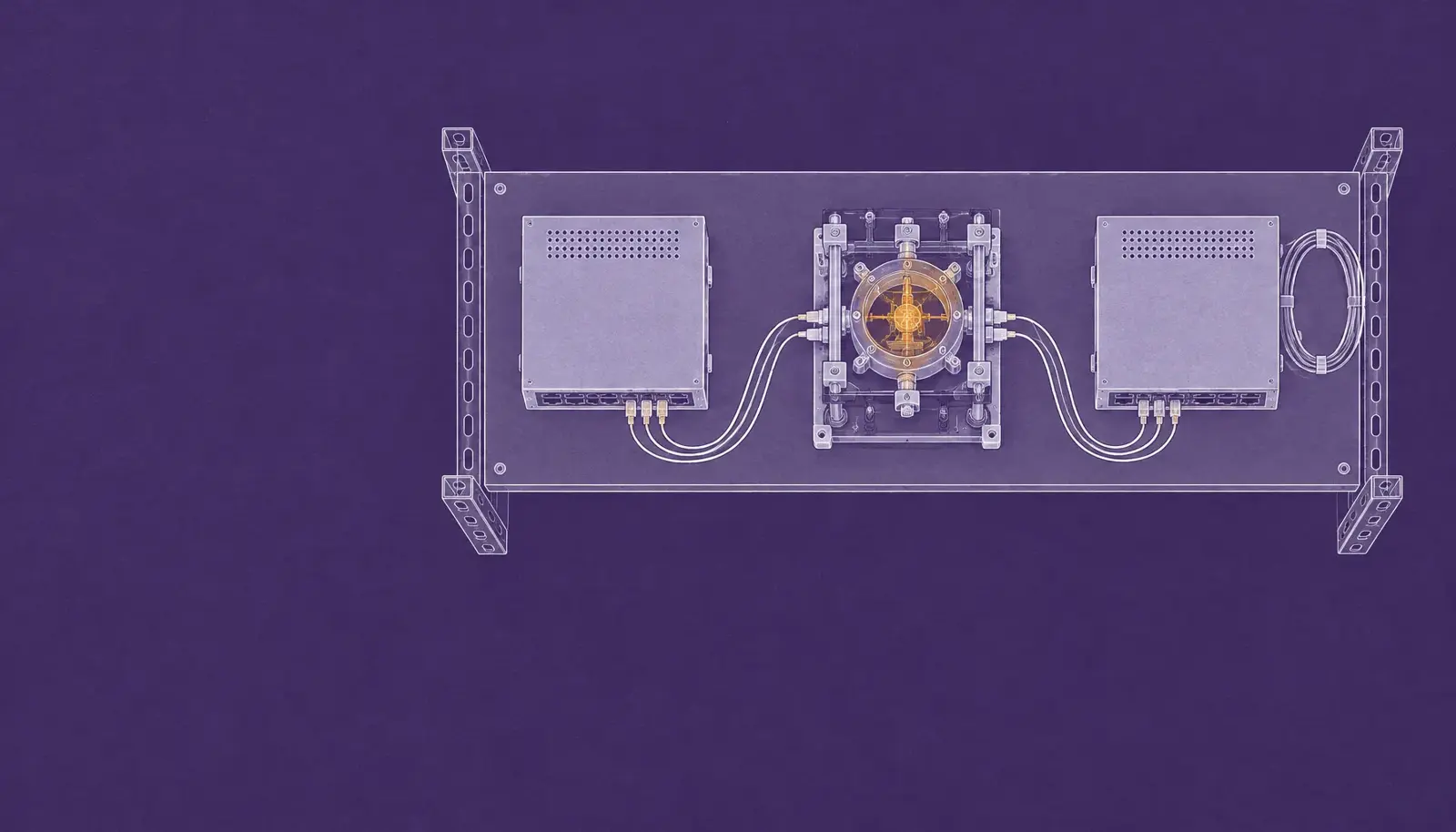
In the deployment, Toshiba QKD systems exchange encryption keys node to node between SQS systems. SQS says the systems use the laws of physics to protect the key exchange. The quantum-delivered keys are intended to be paired with NIST post-quantum algorithms in a defense-in-depth design. The company describes quantum-safe messaging between nodes as the next milestone in integration.
A quantum optical clock in the racks distributes synchronization that does not depend on GPS. SQS says timing is live because GPS-independent synchronization is needed now, while security is first in the build because the threat is already present.
“Most of the industry hands you a product and leaves the quantum transition to you. We're building the utility instead,” said Zain Premji, SQS co-founder and Chief Strategy Officer. The announcement describes the service as a way to bring quantum capabilities to organizations without requiring them to replace the systems they already use.
A path for existing infrastructure
SQS says its platform is intended to fit into infrastructure already operated by organizations, with the existing infrastructure staying in place as the cryptographic layer upgrades. The company frames this as a practical alternative to a large-scale rebuild, including for organizations whose systems range from cloud platforms to on-premises and fixed-firmware equipment.
The announcement says the deployment operates as a multi-vendor stack and has hosted hands-on technical sessions for U.S. Government evaluators and commercial prospects since going live. SQS said additional sessions were scheduled through the fall. It thanked Toshiba and Celestica as hardware partners, identifying Toshiba QKD systems and Celestica network switching among the equipment in the racks.
The company says the platform is intended to help organizations address quantum-era security requirements while continuing to use the infrastructure they trust. It identifies “harvest now, decrypt later” collection—storing encrypted data in anticipation of being able to decrypt it as quantum computers mature—as a concern for data that must remain sensitive for decades. SQS says boards, examiners and security leaders in government and regulated industries are already asking for quantum-readiness plans.
SQS describes QKD as a proven technology that has been commercially fielded by companies such as Toshiba, but says the challenge is delivering an end-to-end service that organizations can use without a rapid cryptographic rewrite. Its proposed approach begins with a pilot on live infrastructure, with customers able to modernize on their own schedule.
The company calls the Albuquerque deployment the first in a series of infrastructure milestones across multiple sites and says additional announcements are expected in the coming months. SQS also says sensing and, eventually, computing are intended to use the same quantum-ready infrastructure as those capabilities mature.
Source
Related stories
- Stuttgart Team Runs Quantum-Dot QKD for 19 Hours on Campus Fibre
- Preprint reports live keys from four-city Slovak QKD network
- Paderborn team demonstrates quantum-dot entanglement swapping
- PRX Quantum paper demonstrates phase-controlled photon routing
- Tanay Roy’s Protocol Lets a Quantum Gate Wait for Its Recipient