The Signal
Researchers Tune Interactions in a Three-Component Hubbard System
An international team created a three-component Hubbard system with tunable interactions using ultracold atoms and a quantum gas microscope. The experiment observed a Mott insulator and identified other phases, including ferromagnetic and antiferromagnetic correlations.
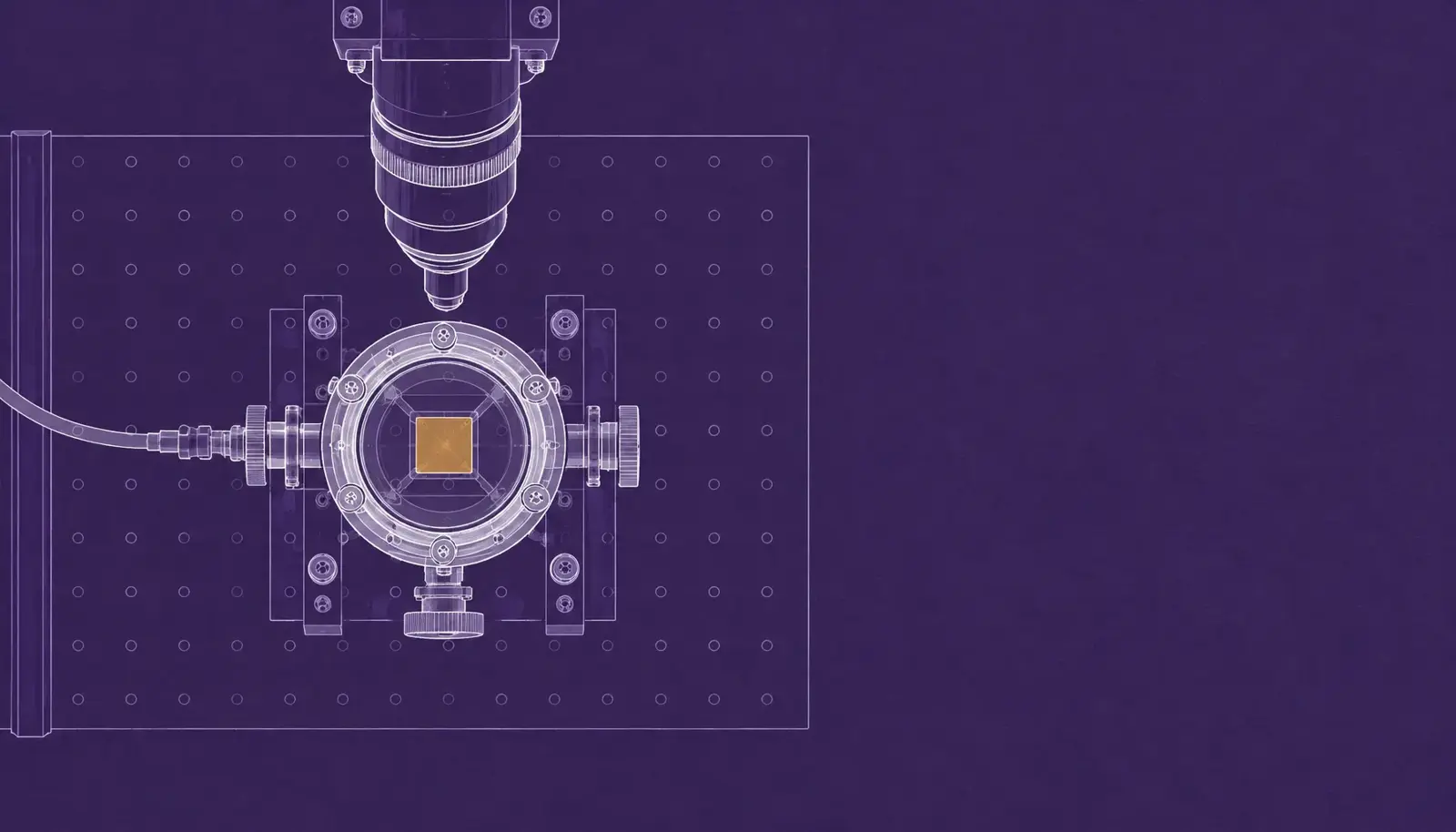
An international team of researchers from Germany, Thailand, India, China and the United States has created a three-component Hubbard system with tunable interactions in the laboratory. The researchers used ultracold atoms and a quantum gas microscope, which can detect individual atoms with spatial resolution. Their experiment realized a Mott insulator and identified other phases that depend on the interactions between the three states.
Source cui-advanced.uni-hamburg.de
“It turned out that the experimental realization is surprisingly stable,” said Peter Schauss. “Usually, one fears that three-body collisions could quickly destroy the system. Despite this potential danger, we were able to successfully carry out the measurements and observe a Mott insulator.”
Adding a third component
Ultracold atoms can be used to build systems that resemble those found in solid-state physics. In this kind of experiment, fermionic atoms play the role of electrons in a solid. The system realizes a Hubbard model, which describes interactions between fermions on a lattice and is considered a promising way to investigate high-temperature superconductivity.
The standard Hubbard model typically includes two spin states, spin-up and spin-down. Adding a third component gives researchers a more versatile system in which to investigate a wider range of quantum-mechanical phases. The three atomic states also resemble one feature of nuclear physics: quarks can have three different colors.
Atoms move and interact in the lattice
In the optical lattice, atoms in the lowest energy state can tunnel between lattice sites, effectively swapping places. Identical fermions cannot occupy the same location. When distinguishable fermions meet at one location, however, an interaction energy arises that depends on the magnetic field.
The team used atoms in different internal states to realize different kinds of fermions, ultimately using three distinct states. A quantum gas microscope made it possible to detect each atom individually and to control the interactions specifically. The researchers also set out to detect fundamental states and phases in the system.
Insulating behavior and magnetic correlations
In a Mott state, interactions suppress the double occupation of lattice sites. Strong interactions prevent particles from flowing freely between sites, producing insulating behavior. High-temperature superconductivity emerges near Mott states, making the regime relevant to the study of superconductivity.
Beyond observing a Mott insulator, the team identified other phases that depend on the strength of the interactions between the three states. In the same system, the researchers found that ferromagnetic correlations can occur between two states while antiferromagnetic correlations occur between two others.
Comparing measurements with calculations
The researchers developed a method for determining how many lattice sites were occupied by three atoms. The measured values agreed with numerical calculations performed by collaborators at Rice University. The result provides a way to compare observations of the system with calculations of its behavior.
The researchers plan to refine the interactions in the model further. Their longer-term aim is to study lattice models of quantum chromodynamics, or QCD, in the laboratory. The study was published in Science under the title “Quantum gas microscopy of three-flavor Hubbard systems.”
Source
Related stories
- Researchers Realize a Bound State in the Continuum in Ultracold Li Collisions
- Roth Team Maps Arbitrary Atom Rearrangements onto Optical Lattices
- Ultracold Atoms Reveal Mobile Fractons in Quantum Walks
- Researchers estimate X-ray spectroscopy model at 100 logical qubits
- Researchers Map Trapped-Ion Ramsey Data to Feynman Diagrams