The Signal
TU Delft researchers test quantum fluid-dynamics algorithms on QuTech processors
TU Delft’s Quantum CFD Lab ran a quantum lattice Boltzmann simulation on QuTech’s Tuna-9 and Tuna-17 processors, alongside a commercial quantum processor and an ideal simulator. The four-timestep test used a one-dimensional grid of eight cells, while the source reports that adding a fifth timestep significantly degraded the results.
Researchers from the Quantum Computational Fluid Dynamics (QCFD) Lab at TU Delft ran computational fluid dynamics algorithms on quantum computers developed at QuTech, part of TU Delft. Using Quantum Inspire, TU Delft’s free, open and cloud-based quantum computing platform, the team tested its algorithms on real quantum hardware rather than relying only on simulations.
The researchers ran their algorithms on QuTech’s Tuna-9 and Tuna-17 quantum processors. The work let the team investigate how its methods perform on current quantum hardware. Associate Professor Matthias Möller, who leads the QCFD Lab, said: “It is still a long way before we can run meaningful CFD simulations on a quantum computer, but the opportunity to benchmark our codes at zero costs on QuTech’s on-premises quantum computers is very helpful to evaluate where we stand, even if our focus as a team is on advancing algorithms and methodologies,”
A one-dimensional test on eight grid cells
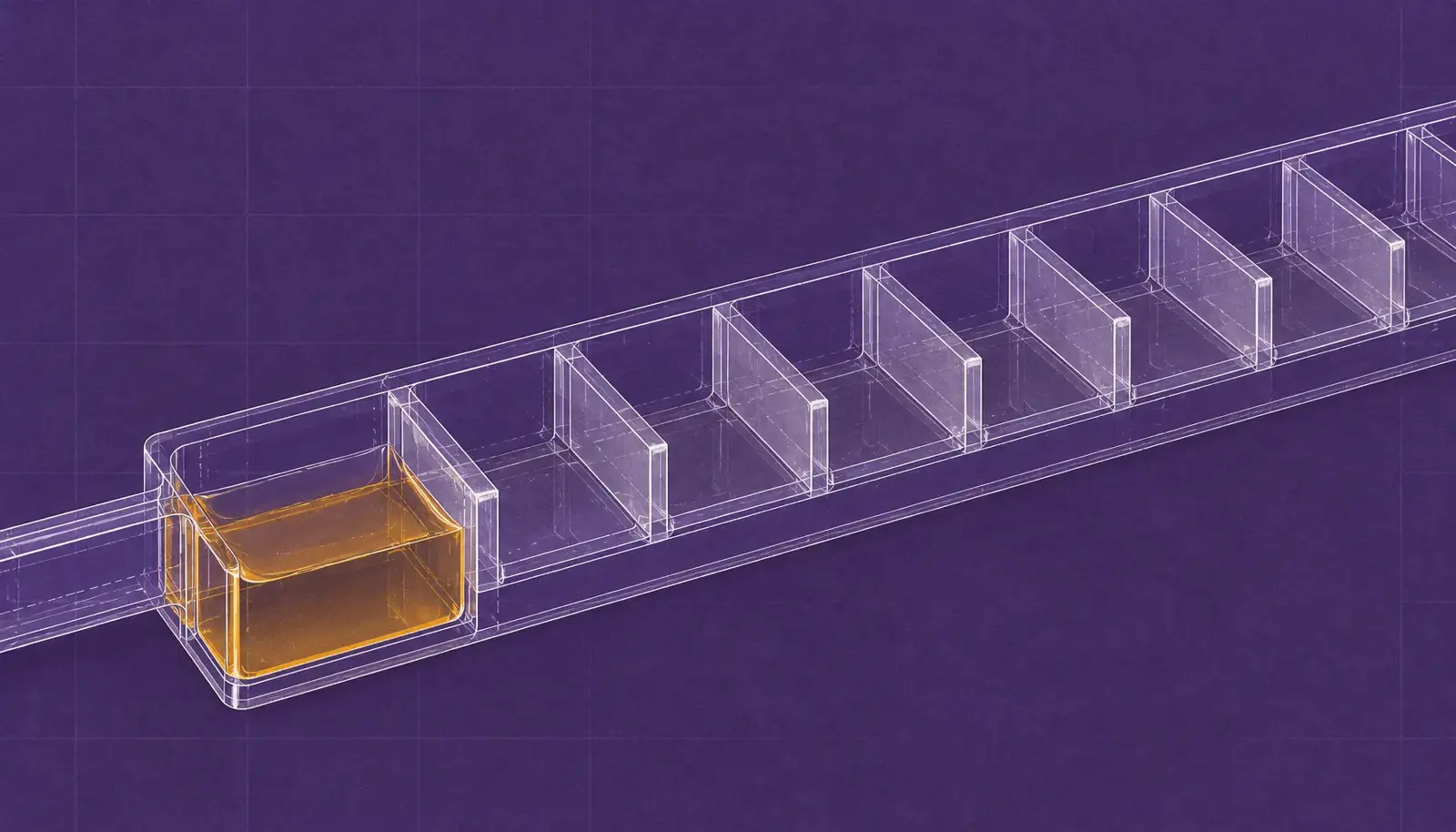
The team set up a quantum lattice Boltzmann simulation on a one-dimensional grid of eight cells. It initialized all the fluid in the left-most cell, with its velocity pointing to the right, then allowed it to stream passively for four timesteps. This setup provided a test case for comparing the simulation’s ideal result with the outputs from quantum processors.
The comparison included a perfect state-vector quantum simulation, runs on the Tuna-9 and Tuna-17 quantum processing units (QPUs), and a commercially offered QPU. The team had access to that commercial processor through cooperation with one of the European high-performance computing centres. The source presents the results after four timesteps for all four approaches.
More than a thousand native gates
The compiled circuits for the experiment consist of more than one thousand native gates. QuTech describes that as about the maximum that current NISQ machines can handle. The article also presents a second comparison after five timesteps and reports a significant degradation in the results after the additional step.
The test is an early investigation of how the team’s methods behave on available hardware, not a demonstration of meaningful computational fluid dynamics simulations running on a quantum computer. Möller said that such simulations are still a long way off. He described access to QuTech’s on-premises processors at no cost as useful for benchmarking the team’s codes and evaluating their progress, while its focus remains on advancing algorithms and methodologies.
Connecting quantum hardware and fluid-dynamics research
The QCFD Lab is developing quantum algorithms that could eventually contribute to simulations used in aerospace, automotive, energy and transportation. The collaboration brings that computational fluid dynamics expertise together with QuTech’s quantum computing expertise and hardware. Researchers can use the processors to test algorithms and explore their limitations.
QuTech says it aims to make quantum computing accessible to researchers in other scientific disciplines around the world. Its Quantum Inspire platform was built with funding support from QDNL, NWO and Holland High Tech. QuTech also points to collaborations within TU Delft and beyond, including with TNO and TU Eindhoven, as a way for research groups to gain hands-on experience with quantum processors and explore potential applications.
Source
Related stories
- Four Delft researchers win ERC grant for spin-qubit project
- Kaseb tests DelftBlue-to-Tuna-17 workflow through Quantum Inspire
- Researchers Model Quantum Gates in a Recoiled Free Electron
- Aaronson Says He Believes AI Proof of Quantum Conjecture Is Correct
- Researchers propose a common benchmark for photonic simulation