The Signal
Perimeter Team Finds Multiple Peaks in Noisy Quantum Circuits
Perimeter Institute reports that Matthew Duschenes and collaborators derived formulas for measurement statistics in noisy random quantum systems. Their simulations found multiple peaks for certain measurements of brickwork circuits.
On November 3, 2026, Perimeter Institute reported that researchers had derived formulas for measurement statistics in noisy quantum systems. Their simulations found that some measurements of random circuits produce distributions with multiple peaks rather than one. “It leads to nice questions about why there are these multiple peaks and where they might show up in other areas of quantum computing,” Matthew Duschenes said.
From simulation to measurement statistics
Duschenes, a postdoctoral researcher at the University of Guelph, completed his PhD at Perimeter Institute and the University of Waterloo. His advisors included Ray Laflamme, Juan Carrasquilla and Roger Melko, who are also co-authors of the study. The paper received an Editors’ Suggestion in the American Physical Society journal Physical Review A; Perimeter’s account says the designation recognizes papers of importance, impact and intrinsic interest.
The research began with a practical aim: finding more efficient ways to simulate quantum systems on conventional computers. “We were initially interested in understanding ways of trying to simulate these quantum systems using conventional computers — so running computer simulation codes and trying to find more efficient ways to simulate these systems.” Duschenes said the work then led the group toward questions about measurement procedures and the information they reveal.
Combinatorics takes a different route
The researchers studied two kinds of randomness together. Quantum mechanics makes measurement outcomes probabilistic, while a quantum-computing protocol can also impose randomness by selecting circuits at random; noise enters as the system interacts with its environment. Duschenes described the protocol-driven element this way: “Our systems of study involve imposing that the systems evolve randomly, due to random protocols that are applied.”
To derive their formulas, the team used combinatorics, the mathematical study of counting and arranging possibilities. That differs from earlier approaches rooted in complex analysis. Duschenes said, “We think this approach is a little cleaner and is a little more intuitive as you progress through the steps when you’re deriving expressions for these statistics and these quantities.”
Brickwork circuits reveal a richer distribution
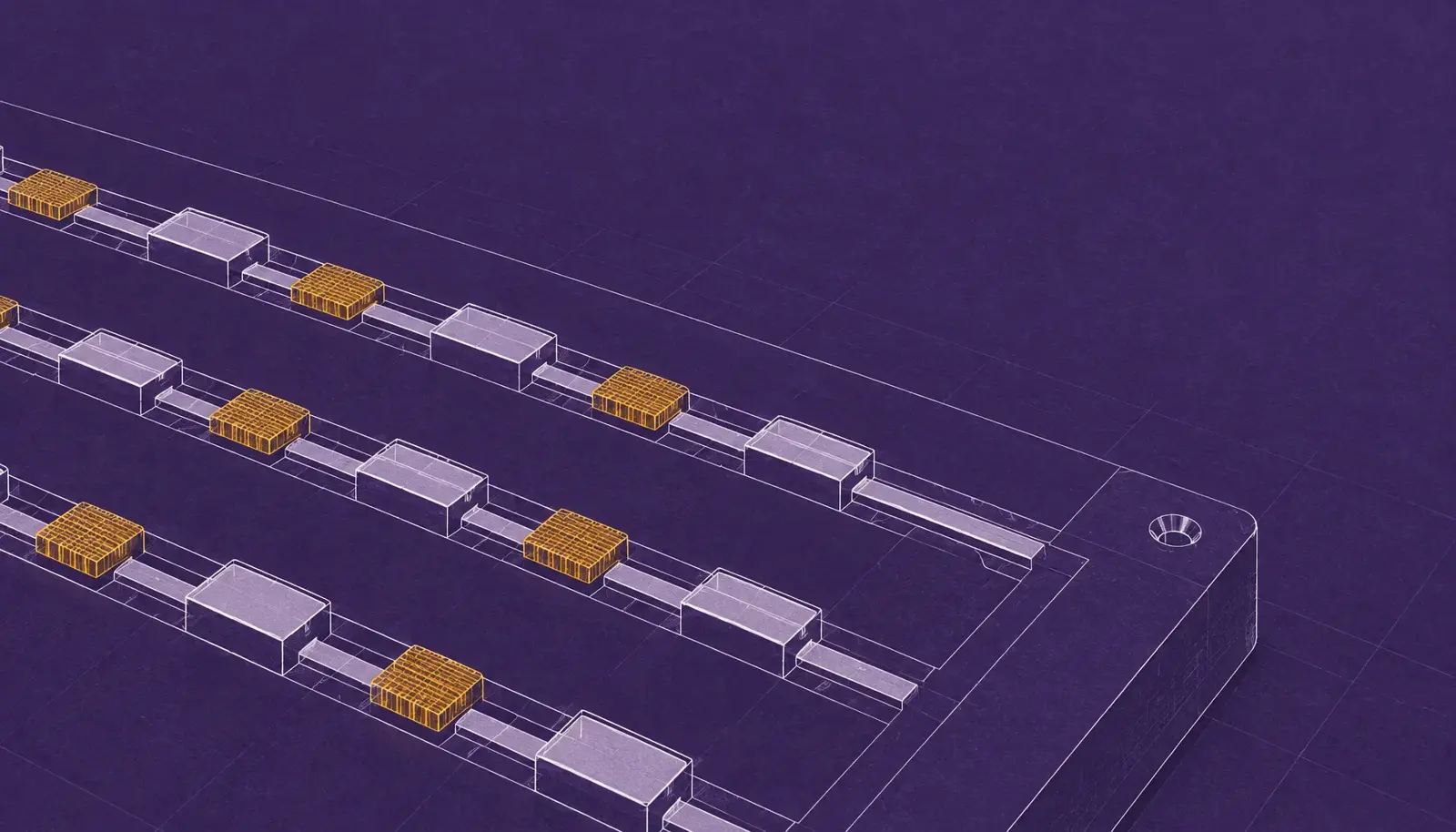
The formulas describe noisy distributions in mixed states: quantum systems partly entangled with an environment that cannot be fully controlled, so some information is lost. The team tested the results in simulations of brickwork circuits, where layers of quantum operations resemble a brick pattern and noise is mixed into each layer. Duschenes said the simulations let the researchers vary system size, evolution time and the amount of noise, then visualize the resulting distributions.
Some measurement procedures, built from mismatched or non-symmetric sets of measurement operators, produced multiple peaks. The result gives a more varied statistical picture than the single-peak distributions described in the account as previously observed. Perimeter says these noise distributions may help researchers assess whether quantum devices can carry out particular tasks that are difficult for conventional computers.
A late paper bearing Laflamme’s name
The work is likely one of the last scientific papers to bear Laflamme’s name. He was a founding faculty member at Perimeter Institute and founding director of the Institute for Quantum Computing at the University of Waterloo; he died in 2025. Duschenes said, “I feel very honoured to have been Raymond's second-last PhD student.”
Perimeter describes the study as a continuation of questions about how noise affects quantum systems and what researchers can extract through measurement. The authors point to further tests in other models of quantum computation and other algorithms to see whether they show the newly observed distributions. For now, the team’s demonstrated result is specific: simulations of noisy brickwork circuits produce multiple peaks for some non-symmetric measurements.