The Signal
NTT Researcher Listed as Author on Quantum-Program Obfuscation Paper
A paper accepted at FOCS 2026 describes classical obfuscation for a broad class of quantum programs in a theoretical oracle model. Omri Shmueli is the NTT Research researcher listed among its authors, alongside researchers from Columbia University and MIT CSAIL.
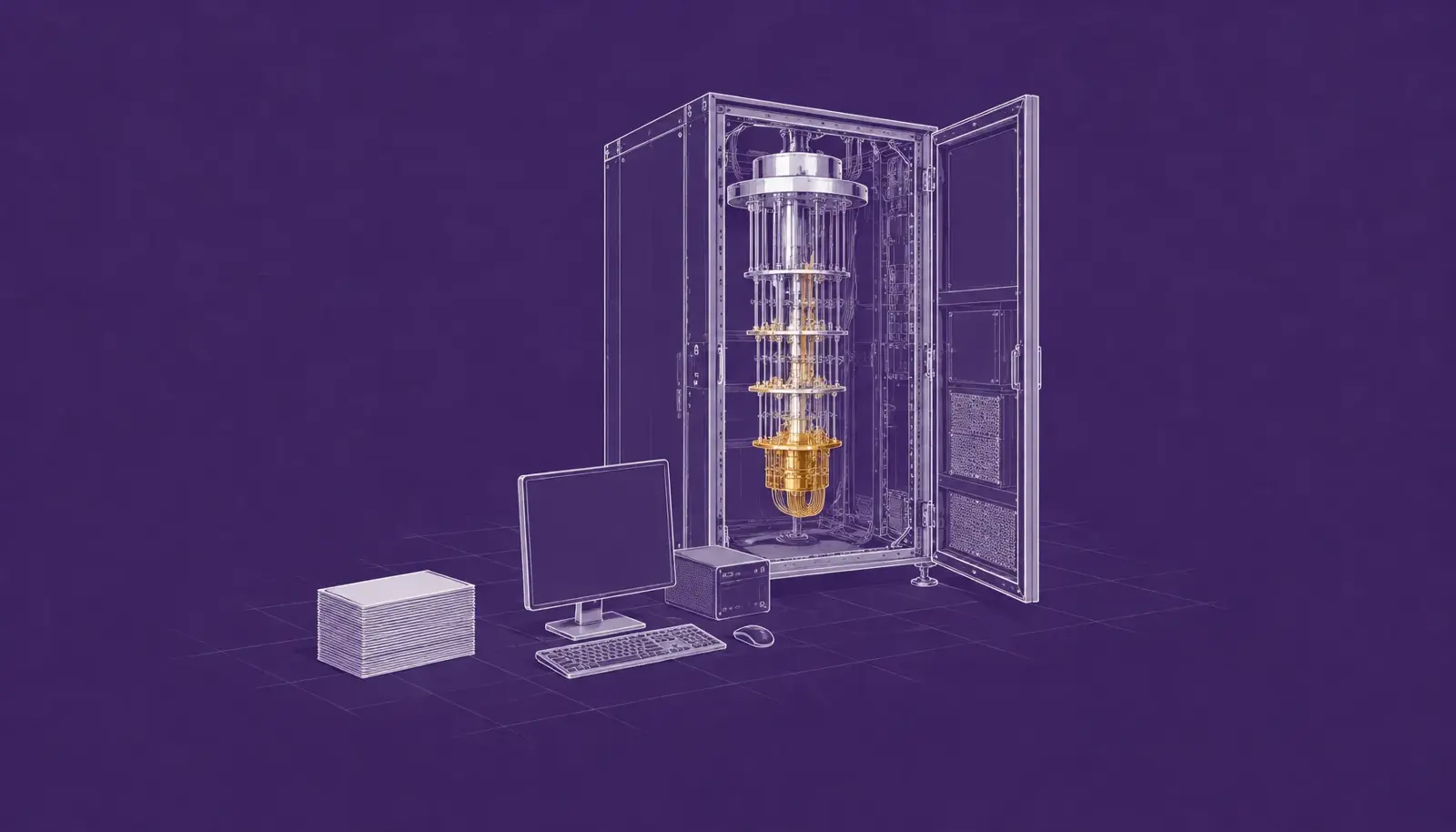
A quantum-program protection paper is among three NTT Research contributions at FOCS 2026.
NTT Research announced on November 8, 2026, that scientists from its Cryptography & Information Security (CIS) Lab contributed to three papers accepted at the 67th Annual IEEE Symposium on Foundations of Computer Science (FOCS 2026). The conference is scheduled for November 8–11 at the NYU Kimmel Center for University Life in New York City.
Source ntt-research.com
One of the papers, “Classical Obfuscation of Quantum Circuits via Publicly-Verifiable QFHE,” addresses protection for quantum programs. Its author list names James Bartusek and Saachi Mutreja of Columbia University, Aparna Gupte of MIT CSAIL, and Omri Shmueli of NTT Research’s CIS Lab.
The paper’s result is set in a theoretical oracle model.
In that model, the paper shows how an ordinary classical computer can protect a broad class of quantum programs. The protected software can be shared as ordinary digital files and executed on quantum computers. The announcement describes program obfuscation as putting software inside a locked box: the program remains usable while its internal design is harder to inspect.
The paper also develops a form of quantum fully homomorphic encryption, or QFHE. It supports computation on encrypted data and allows anyone to verify that the computation was performed correctly without revealing the private data. NTT Research says the findings could help shape future ways to protect proprietary quantum algorithms and make outsourced quantum computation more trustworthy.
The other papers address randomness and cryptographic size.
“Certified Randomness without Structure Against Shallow-Query Adversaries” concerns quantum-generated randomness. The paper proves security without relying on unproven conjectures for a class of limited-depth attacks. Its authors are Dakshita Khurana of NTT Research and the University of Illinois Urbana-Champaign, Bhaskar Roberts of NTT Research and the University of California, Berkeley, and Avishay Tal of the University of California, Berkeley.
A third paper, “Overcoming Padding in Cryptography via Hardness of Certifying Random Strings,” addresses extra size that can be required for cryptographic security proofs. The announcement says this “superfluous padding” can prevent cryptographic tools from becoming succinct, because scheme size grows with the inputs it handles. The researchers present a framework for eliminating padding by connecting cryptography with proof complexity. Under an assumption that certifying a specific incompressible string is hard, the framework yields more succinct versions of tools including program obfuscation, witness encryption, succinct non-interactive arguments, and multi-input functional encryption.
The third paper’s authors are Yao-Ching Hsieh of the University of Washington; Abhishek Jain of NTT Research and Johns Hopkins University; Jiatu Li of MIT; and Surya Mathialagan of NTT Research. Across the three papers, the announcement describes research on certifying randomness, protecting quantum programs, and developing cryptographic tools without unnecessary size overhead.
“People should not have to understand quantum physics to trust a quantum system. They should be able to know its random numbers are genuine, its programs are protected, and its results can be verified,” said Brent Waters, Director of the NTT Research Cryptography & Information Security (CIS) Lab and Professor of Computer Science at the University of Texas at Austin. “These papers tackle the mathematics needed to make that kind of trust possible before quantum computing becomes widely used.”