The Signal
NPL demonstrates entanglement and picosecond sync on QLAN
The National Physical Laboratory says its three-user Quantum Local Area Network distributed energy-time entanglement between remote nodes and achieved picosecond-level synchronisation. The results are presented as a step from laboratory demonstrations toward a multi-lab field trial.
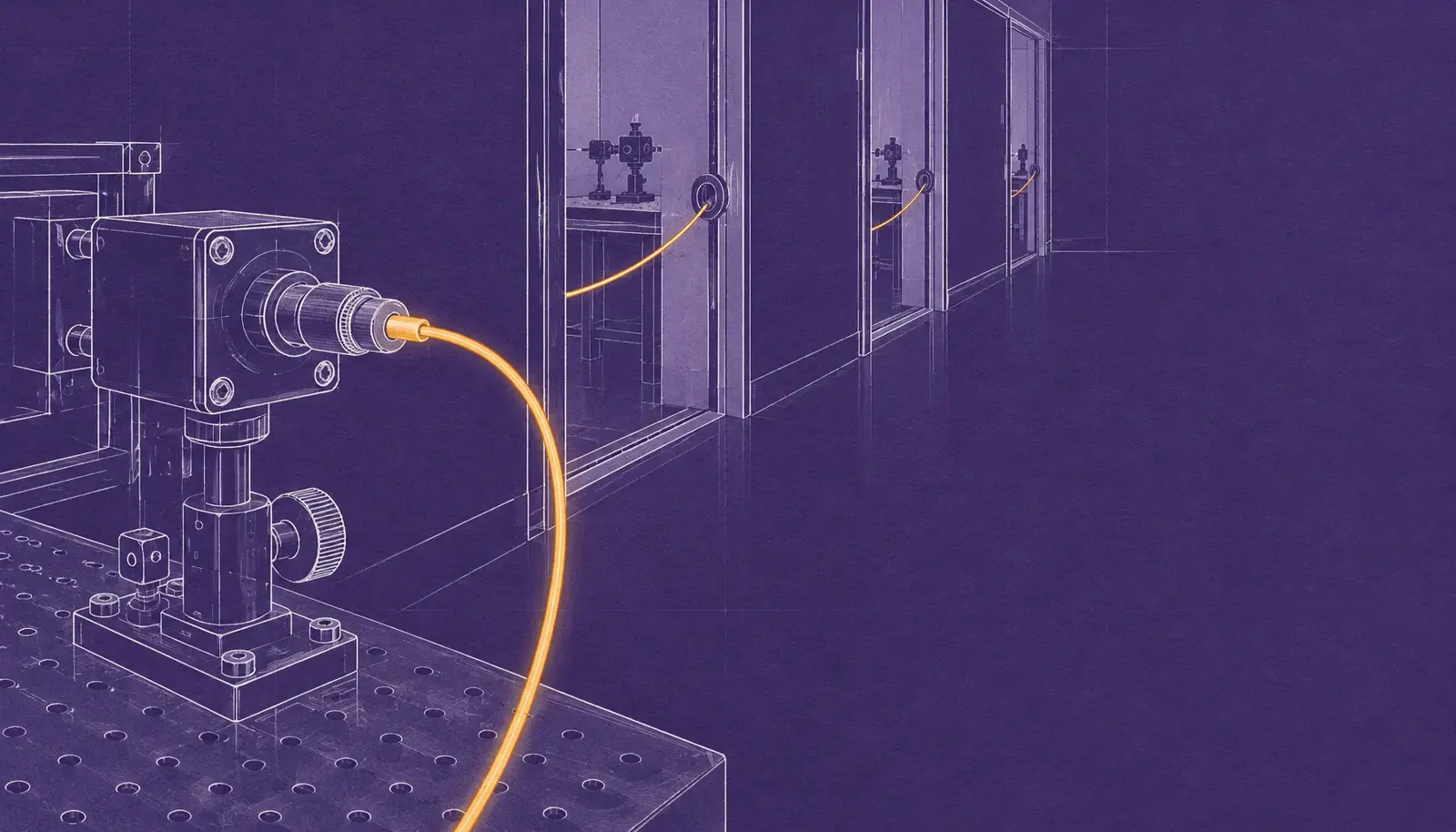
On 3 November, the National Physical Laboratory said researchers had demonstrated two capabilities on its Quantum Local Area Network: distribution of energy-time entanglement between remote user nodes and picosecond-level time synchronisation across the network. NPL describes the QLAN as a three-user network that connects measurement systems in different laboratories through deployed optical fibres. The announcement presents the results as a move from laboratory demonstration toward a multi-lab field trial.
Three users, separate laboratories
The network connects measurement systems rather than placing them together in one laboratory. That arrangement gives the timing work a specific operating challenge: detections at remote systems must be synchronised closely enough to identify entangled or correlated photons exchanged between network nodes. NPL says the fibre links introduce delays, while environmental fluctuations also affect synchronisation.
The announcement describes the required timing precision as picosecond-level. The reported result is that the team achieved that level across the QLAN; it does not provide a numerical timing error or describe a separate benchmark. Its other result concerns energy-time entanglement, which the researchers confirmed was distributed between remote user nodes.
Entanglement and timing on one network
NPL presents the two demonstrations together: remote distribution of energy-time entanglement and network-wide timing synchronisation. Both address capabilities needed to identify photons exchanged between separated nodes, a challenge the announcement links to future quantum networking applications. It names secure communications, distributed quantum computing and enhanced quantum sensing among those applications.
The announcement places the demonstrations against a broader deployment problem. Quantum networking experiments have often taken place in controlled laboratory environments, while operating under realistic conditions brings technical challenges, including fibre-link delays and environmental effects on timing. NPL says its work addresses those issues by combining quantum and timing expertise.
From lab results toward a field trial
NPL characterises the work as a step toward deploying quantum networking technologies outside the laboratory. Its announcement says the work is moving from laboratory demonstration to a multi-lab field trial, but describes the reported achievements as demonstrations on the QLAN. The distinction matters: the results show the network's two stated capabilities, while the announcement frames field deployment as the next stage of the work.
The release does not give a field-trial schedule or report measurements beyond the picosecond-level synchronisation result. Its concrete account is narrower: a three-user network linked through deployed fibre, with energy-time entanglement distributed between remote nodes and picosecond timing achieved across the network.
NPL also describes the wider role of its Quantum Programme, which supports the development of advanced quantum research into real-world technologies through measurement science, expert guidance and facilities. The programme works with industry and researchers seeking to develop quantum products in computing, sensing and communications. That broader remit provides context for the QLAN work: the announcement presents the network demonstrations as part of NPL's contribution to future quantum infrastructure, rather than as a report of a finished field deployment.
Source
Related stories
- Oxford Stores Remote Ion Entanglement in Calcium for 10 Seconds
- Peixue Wu Finds No Entanglement Advantage for Phase-Covariant Channels
- Bogorad and Harnik Tie Coherent Detector Gain to Entanglement
- Shao and Motter Rework Entanglement Percolation
- Researchers define states whose entanglement dimension resists change