The Signal
Lincoln Laboratory’s Quantum Microsystems wins 2026 R&D 100 Award
Lincoln Laboratory’s Quantum Microsystems platform was named a 2026 R&D 100 Award recipient, one of three awards for the laboratory. The platform integrates superconducting and semiconductor chips in a wafer-scale system intended for quantum and other computing applications.
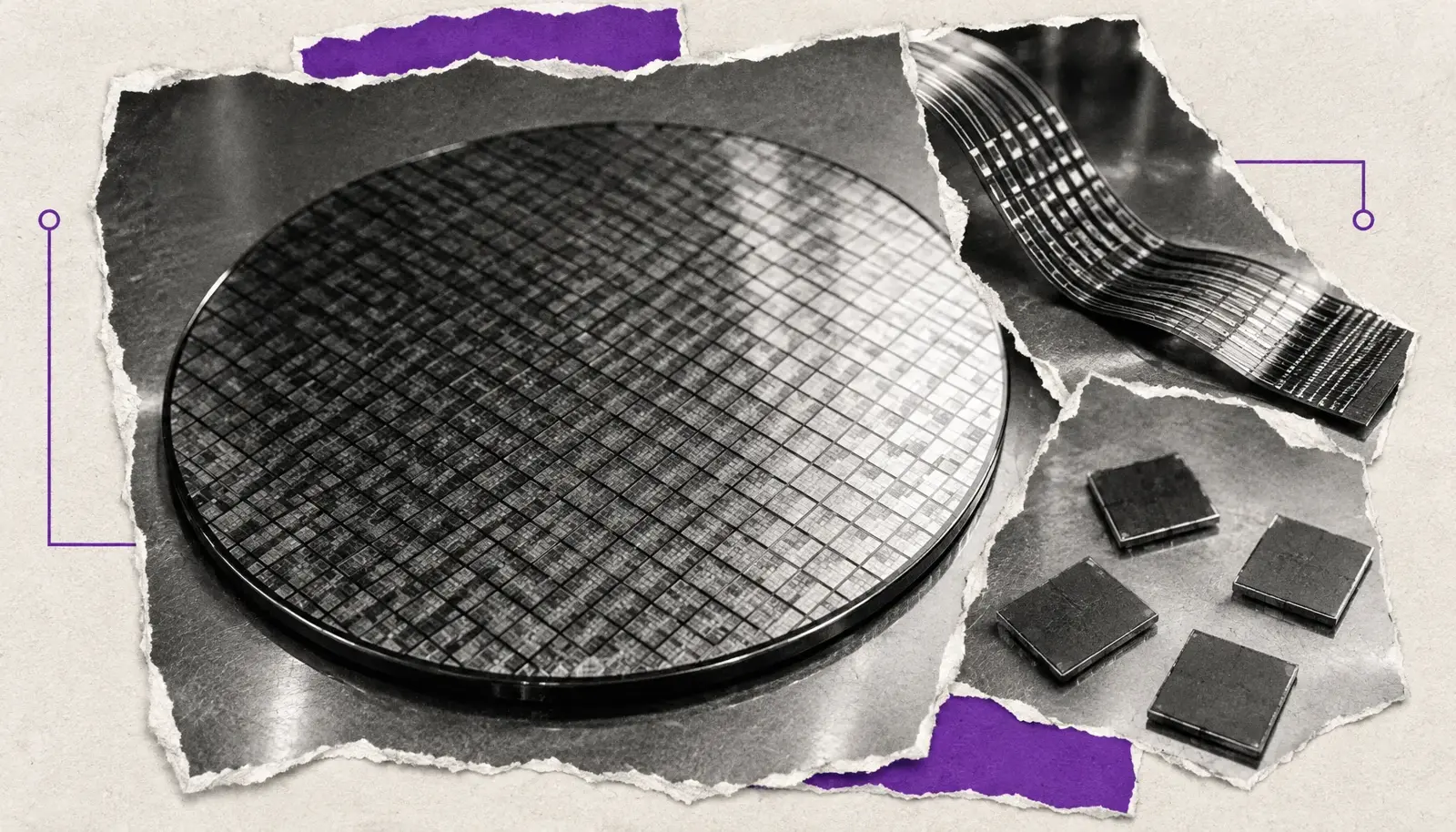
MIT Lincoln Laboratory’s Quantum Microsystems platform was among three of its technologies named 2026 R&D 100 Award recipients, MIT News reported on November 12. The awards recognize innovations that, according to MIT, transitioned to use or became available for licensing during the prior year. R&D World announced the 2026 winners on August 6, selecting them from 149 finalists across six categories.
Wafer-scale chip integration
Quantum Microsystems combines superconducting and semiconductor chips in a single wafer-scale system. Lincoln Laboratory says the platform integrates hundreds of chips and uses an AI decision-tree approach to determine how to route connections across a wafer. The system is intended for quantum computing, artificial intelligence and high-performance computing.
The fabrication process tests a wafer for defects before using digital lithography to draw custom wiring layers between chip locations and around defective circuit components. Chips are connected with microbump or bumpless techniques, while a superconducting fabric extends connections across the wafer. The platform replaces coaxial cables with integrated, lithographically defined flexible interconnects, according to the laboratory.
The platform is designed to be reworkable, allowing chiplets to be replaced or upgraded without rebuilding the full system. Its configurations can range from individual and stitched-reticle designs to mix-and-match multireticle systems and fully integrated wafer-scale platforms. Lincoln Laboratory says its AI engine adapts to process variations and design changes during manufacturing.
Designed for transition
Rabindra Das, the platform’s principal investigator in Lincoln Laboratory’s Quantum-Enabled Computation Group, described the approach as a shift from scaling individual chips to integrating systems. The laboratory says the technology is designed for transition to government and commercial foundries, and may be available for licensing and collaborative development through its technology transfer process.
The laboratory’s account identifies interconnection as a challenge for quantum systems, where superconducting chips need cryogenic cooling and must connect with room-temperature control electronics. It says bulky coaxial cables can take up space, slow data transfer and generate heat. The platform’s integrated connections are intended to reduce cryogenic wiring overhead and system complexity.
Two other laboratory awardees
The other Lincoln Laboratory technologies recognized this year were Magnetite, an operating system for embedded computers, and an algorithm designed to cancel interference from 5G base stations on co-channel radio-frequency systems. MIT says Magnetite is built on the seL4 microkernel, with operating-system services written in Rust and configured as isolated processes.
The 5G algorithm reconstructs an interfering signal and subtracts it from incoming data, according to the laboratory’s description. Tests using signals captured over the air from a Nokia 5G base station at Hill Air Force Base recovered a radar signal buried by cellular interference. Lincoln Laboratory reported that the restored signal came within two decibels of its original signal-to-noise ratio, corresponding to 89 percent preservation of the radar’s interference-free detection range.
Sources
Related stories
- Fermilab, IBM and NVIDIA plan modular quantum platform
- Yonsei Installs IBM’s Latest Quantum Nighthawk Processor at Its Quantum Computing Center
- Researchers Model Quantum Gates in a Recoiled Free Electron
- U.S. quantum commission proposes shared manufacturing program
- Aaronson Says He Believes AI Proof of Quantum Conjecture Is Correct