The Signal
ICFO team images all ten strontium spin states in one run
A quantum-gas microscope captured individual strontium-87 atoms and distinguished all ten of their spin states in one experimental sequence. The published study reports 92.5% pinning fidelity and uses simulations—not a direct measurement of many-body spin correlations—to assess the method’s capabilities.
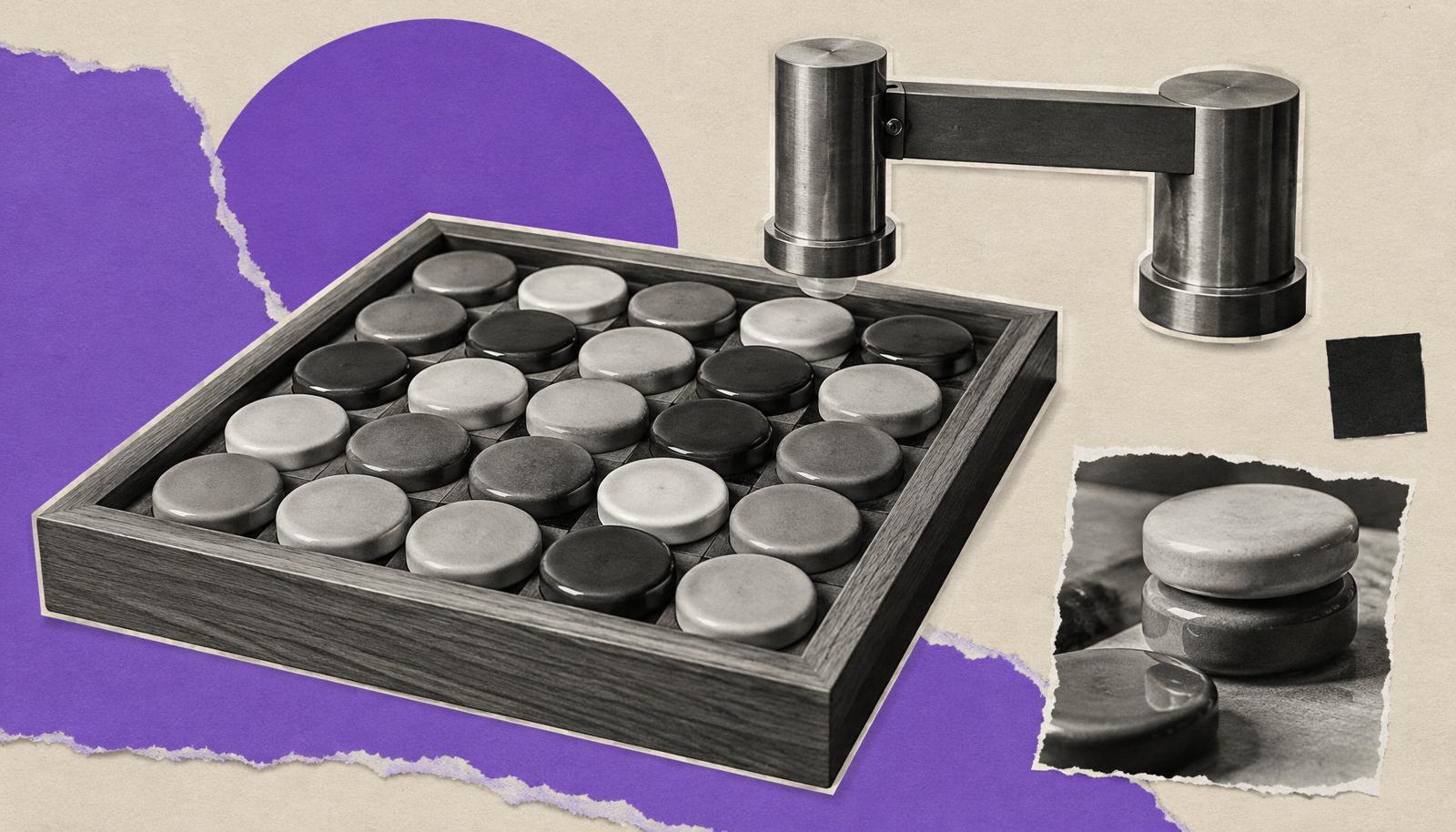
A quantum-gas microscope built by ICFO researchers has imaged individual fermionic strontium-87 atoms and distinguished all ten of their spin states in one experimental sequence. The study, published November 16 in Physical Review X, reports the spin-resolved measurement and benchmarks the imaging method.
Source journals.aps.org
Ten states, one sequence
Strontium-87 has ten nuclear spin states. The researchers’ method determines which states occupy individual sites in an optical lattice, using fluorescence from a narrow intercombination line at 689 nanometers. The paper describes this as single-atom detection with spin resolution.
The sequence is built from ten detection blocks, rather than one simultaneous exposure of all states. In each block, optical pumping transfers one target state into the spin state addressed by the imaging light; the atoms fluoresce, and those detected are removed before the next block. The resulting images are combined to reconstruct the spin-state occupation across the lattice.
One example in the paper shows a 35-by-35-site lattice containing 253 atoms distributed among the ten spin states. Each atom’s position and assigned spin state appear in the reconstructed image. The researchers note that some sites were detected in more than one image, which they identify as multidetection events.
Imaging performance and limits
To characterize how well atoms stayed pinned to their lattice sites during imaging, the team compared consecutive images. The paper reports a pinning fidelity of 92.5%, alongside a hopping rate of 1.0% and a loss rate of 6.5%. The authors say a large fraction of the apparent loss was associated with spin depolarization rather than atoms physically leaving the lattice.
The paper also reports a total spin-depolarization probability of 4.2% per imaging cycle. This matters to interpreting the sequence: an atom can change spin during imaging and consequently appear in more than one state’s image. The researchers identify off-resonant scattering of trapping light as the source of the depolarization.
Testing the method
The team benchmarked its protocol by measuring single-particle Larmor precession across strontium-87’s full spin-9/2 ground-state manifold. It also used numerical simulations of SU(N) Fermi-Hubbard chains that incorporated measured detection fidelities. The paper presents the simulations as evidence that the detection scheme could resolve many-body spin correlations; those correlations were not reported as a direct measurement in this experiment.
The work’s authors say the microscope provides a detection tool for research in quantum simulation, computation and metrology. Their reported result is an imaging method for resolving all ten spin states at single-atom level within one experimental run.
Source
Related stories
- Quantum team tests monopole-scattering analogue on Quantinuum H2
- Nature study reports resistance minimum in superfluid channels
- Researchers test Holstein-Primakoff boson simulation on noisy qubits
- Preprint reports Rigetti processor simulation of inner-product change
- Researchers track a single phonon through a 10-ion crystal