The Signal
WSe₂–WS₂ Chip Delivers 357,000 Single Photons per Second
Researchers coupled strain-engineered bilayer WSe₂ emitters to multimode WS₂ waveguides and measured high-purity single-photon emission in two configurations. For one output, the count rate at the first lens was about 357,000 photons per se
Quantum.world Team · Written with AI · fact-checked ·
A single-photon source built from layered materials produced an out-coupled count rate of about 357,000 photons per second at a collection lens, according to research published October 28 in Nature Communications. The device combines strain-engineered bilayer WSe₂ quantum emitters with multimode WS₂ waveguides and grating couplers. The researchers also estimate a minimum waveguide-coupled rate of 1.68 million photons per second.
Two rates describe different measurements
The 357 kHz figure is the out-coupled single-photon count rate measured at the first lens for a single output under continuous-wave, discrete-state excitation. The 1.68 MHz figure is an estimate of the minimum rate coupled into the waveguide. One is a count measured after light has been out-coupled and collected; the other is an estimate of the rate within the waveguide. They describe different points in the optical path and should not be treated as equivalent measurements.
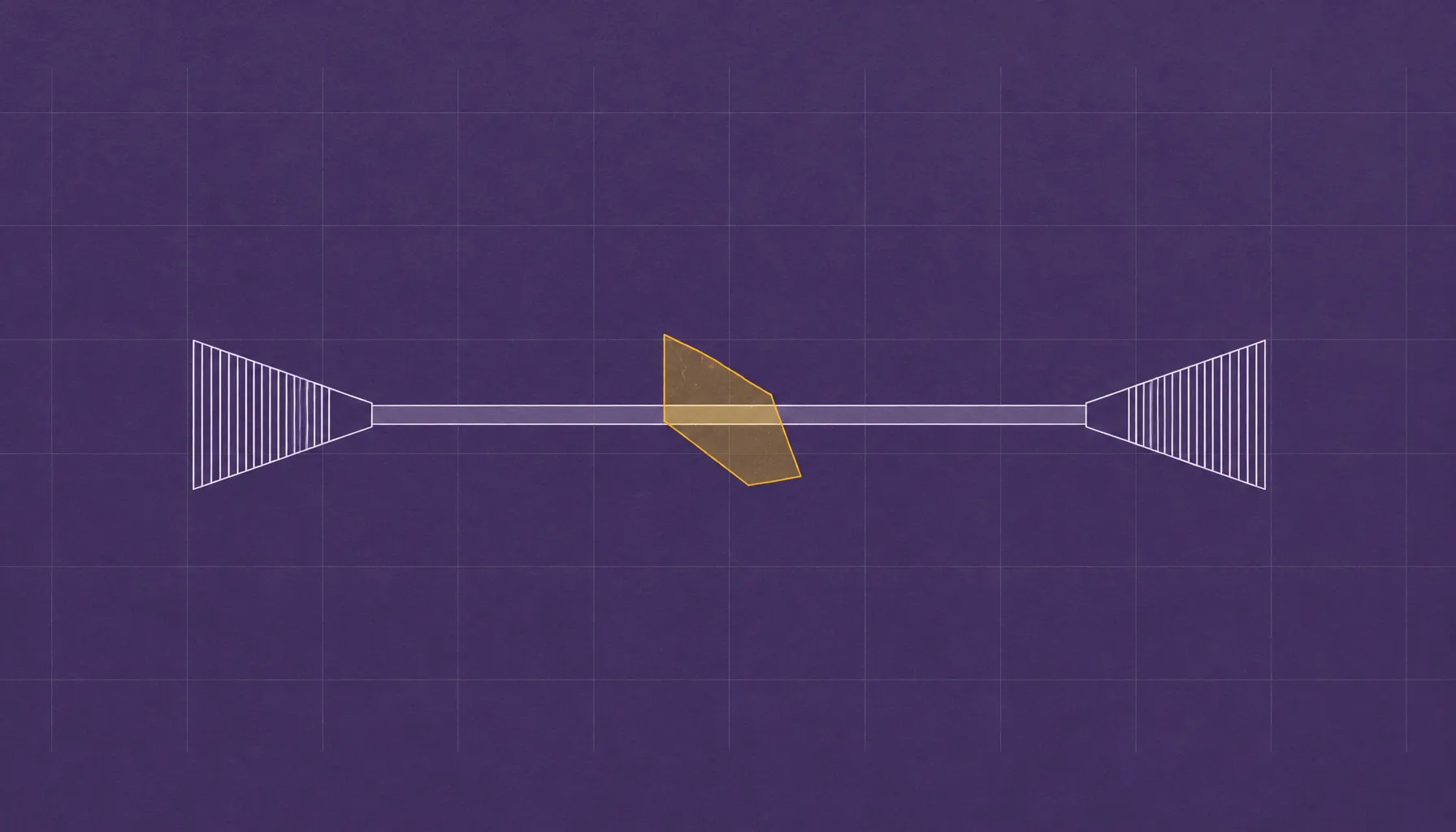
The study’s platform brings together two transition-metal dichalcogenides: bilayer tungsten diselenide, or WSe₂, for the quantum emitters, and tungsten disulfide, or WS₂, for the waveguides. The authors report bright, highly polarised emission from the emitters that couples efficiently into the WS₂ waveguides. Grating couplers are part of the device, and the reported lens count is for light out-coupled at a single output.
Testing single-photon emission
The team measured the emitted light using both a single-port arrangement and a cross-correlated, multi-port arrangement. The reported zero-delay second-order correlation, g(2)(0), was 0.003, with an uncertainty of +0.030 and −0.003, for the single-port measurement. For the cross-correlated, multi-port measurement, the value was 0.076 ± 0.023. The paper describes both results as high-purity, waveguide-coupled single-photon emission.
In the multi-port arrangement described in the authors’ manuscript, photons were collected from two waveguide ports and correlated to measure the source’s second-order emission statistics. That approach uses the waveguide’s two outputs in the measurement, rather than dividing light collected from only one output. The two reported g(2)(0) values come from different measurement configurations, so they should be read as separate results rather than interchangeable readings.
A van der Waals source platform
The paper frames the work within a broader goal for photonic quantum information technologies: bringing quantum light sources, waveguides and detectors together on a single chip. Its experiment demonstrates a source based on WSe₂ emitters coupled to WS₂ waveguides. The abstract reports the emitter and waveguide results, including the single-port count rate and the two correlation measurements.
Transition-metal dichalcogenides are layered materials that can be combined in van der Waals structures. In this device, the WSe₂ emitters provide the single photons and the WS₂ waveguides carry the coupled light. The authors’ reported measurements address both the photon statistics and the rate observed for a single output, while the estimated waveguide-coupled rate provides a separate measure of the source’s guided emission.
“These results demonstrate an efficient, integrated single-photon source based on van der Waals materials, representing a step towards scalable integrated quantum photonics.”
The authors write: Pietro Metuh, Paweł Wyborski, Athanasios Paralikis, Frederik Schröder, Nicolas Stenger, Niels Gregersen and Battulga Munkhbat, researchers at the Technical University of Denmark.
The distinction between the measured lens count and the estimated waveguide-coupled rate is central to interpreting the brightness result. The paper reports both figures for a single output under continuous-wave, discrete-state excitation: approximately 357 kHz at the first lens and an estimated minimum of 1.68 MHz coupled into the waveguide. The reported correlation results separately assess single-photon emission in the single-port and cross-correlated multi-port configurations.