The Signal
UK Sets 15-Year Route to Put Quantum Systems in Space
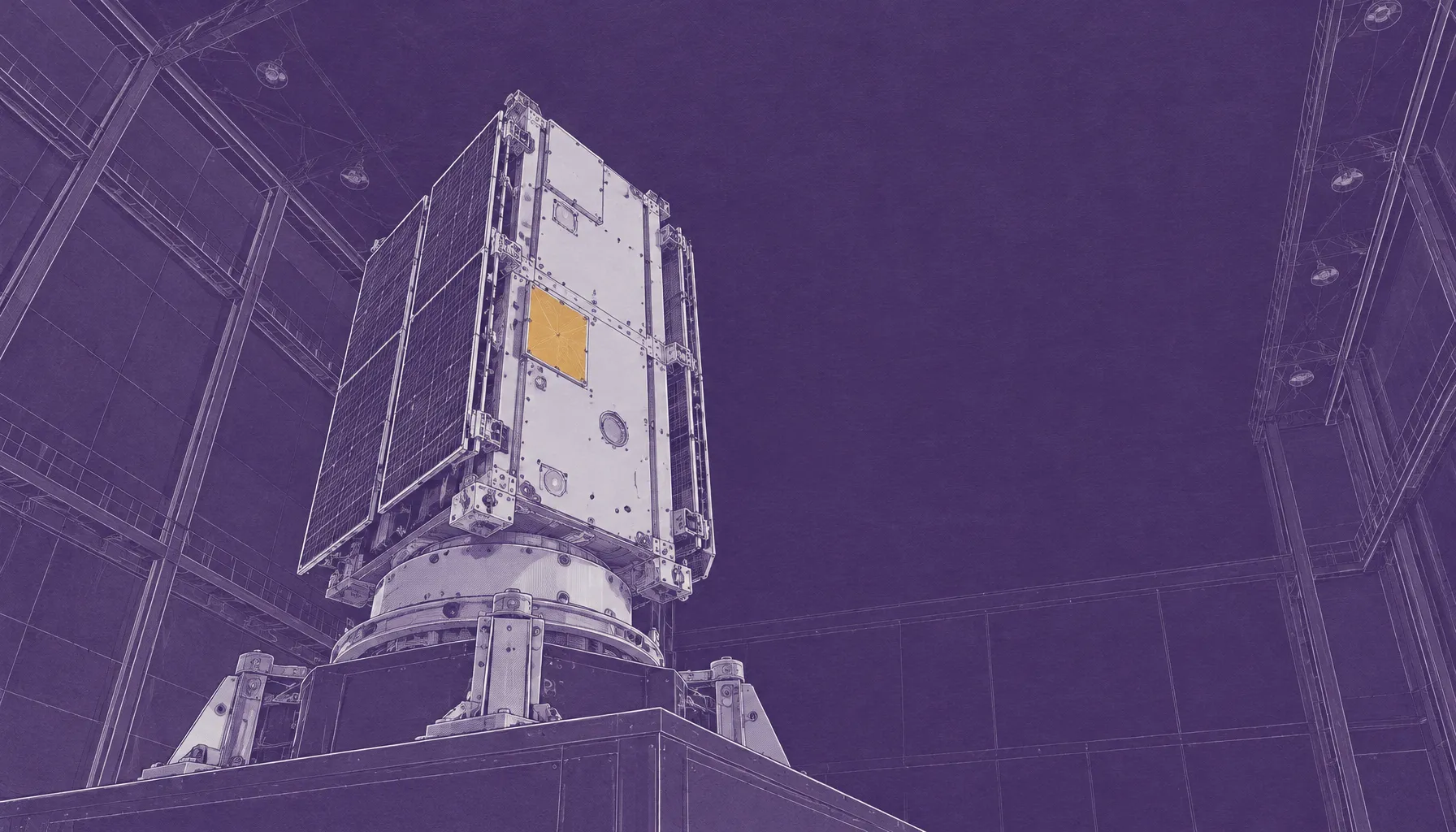
The UK’s Quantum Technology Roadmap for Space sets priorities for moving quantum timing, sensing and secure communications from prototypes towards space use by 2040. Published on 27 October, it lays out three development horizons and calls
Quantum.world Team · Written with AI · fact-checked ·
“The opportunity now is to bring these communities together, linking quantum technology development to mission requirements, qualification pathways and operational use.”
Sir Peter Knight, Chair of the National Quantum Technology Programme Strategic Advisory Board
The UK published a 15-year roadmap for quantum technology in space on 27 October, setting out how research and prototypes could progress towards flight-qualified equipment and operational services by 2040. The document, developed for the UK Space Agency and the Department for Science, Innovation and Technology by Space Professionals Partnership Ltd and Quantum Technologies Associates Ltd, puts timing, navigation and sensing, secure communications, and quantum computing into four investment themes.
Its timetable divides that work into three broad stages: readiness-building in years zero to five, targeted flight demonstrations and early service concepts in years five to ten, then wider deployment in years ten to fifteen. The roadmap cautions that the intervals are a way to frame development, not predictions of exact dates. Early milestones mean preparing systems for demonstration and integration; they do not promise immediate operational use in orbit.
Flight qualification is the test
The roadmap’s near-term emphasis is on translating technology into systems that can survive launch and work reliably in space. That means engineering for radiation, temperature changes, size, weight and power limits, as well as building repeatable testing and qualification routes. The document argues that device performance alone will not determine progress: hardware also has to be manufacturable and supportable within spacecraft and service architectures.
Timing is one of the proposed priorities. Optical clocks and quantum time-transfer systems could support more stable timing between spacecraft and ground stations, reducing dependence on timing derived from satellite navigation systems. The roadmap calls for technology maturation, staged qualification and flight demonstrations before such systems become part of future positioning, navigation and timing services.
For sensing, it identifies cold-atom inertial sensors, optically pumped magnetometers and other quantum sensors for possible roles in navigation, space-weather monitoring, Earth observation and planetary science. Their promise includes lower drift or more sensitive measurements in selected applications, but the report stresses that compact, low-power designs and evidence from realistic operating conditions are still needed. Its recommended path runs through targeted integration programmes and early in-orbit demonstrations.
Secure links move sooner than quantum computers
Quantum-safe communications receive the clearest near-term security priority. The recommendations pair post-quantum cryptography, which can be implemented in conventional computing systems, with in-orbit demonstrations of quantum key distribution. The roadmap also calls for integrated photonics and optical payloads suitable for future satellite constellations, while treating quantum networking at larger scales as a longer-term development.
Quantum computing occupies a more cautious place. The report sees potential in problems such as mission planning, trajectory optimisation and space-weather modelling, but says space-qualified quantum computers are far from mature. It recommends developing algorithms and testing candidate workloads on terrestrial systems, without making space missions depend on quantum computers becoming available soon.
The roadmap calls for enablers, not a deployment guarantee
Across all four themes, the document asks the UK to strengthen supply chains for components including lasers, optics and vacuum systems; expand testing and qualification facilities; develop standards; and train workers for quantum-enabled space missions. It describes a UK base of more than 300 quantum organisations, while warning that the country lacks established sovereign flight heritage for quantum payloads at the pace it considers necessary.
The roadmap sets priorities and proposed development steps, rather than a schedule of funded contracts or guaranteed launches. Its central measure of progress is whether selected technologies move from laboratory capability to systems that can be qualified, integrated and supported in space. For now, the clearest milestones are engineering, testing and demonstrations—not routine deployment.