The Signal
Toshiba Launches Hub-Based Quantum-Safe Networking Platform
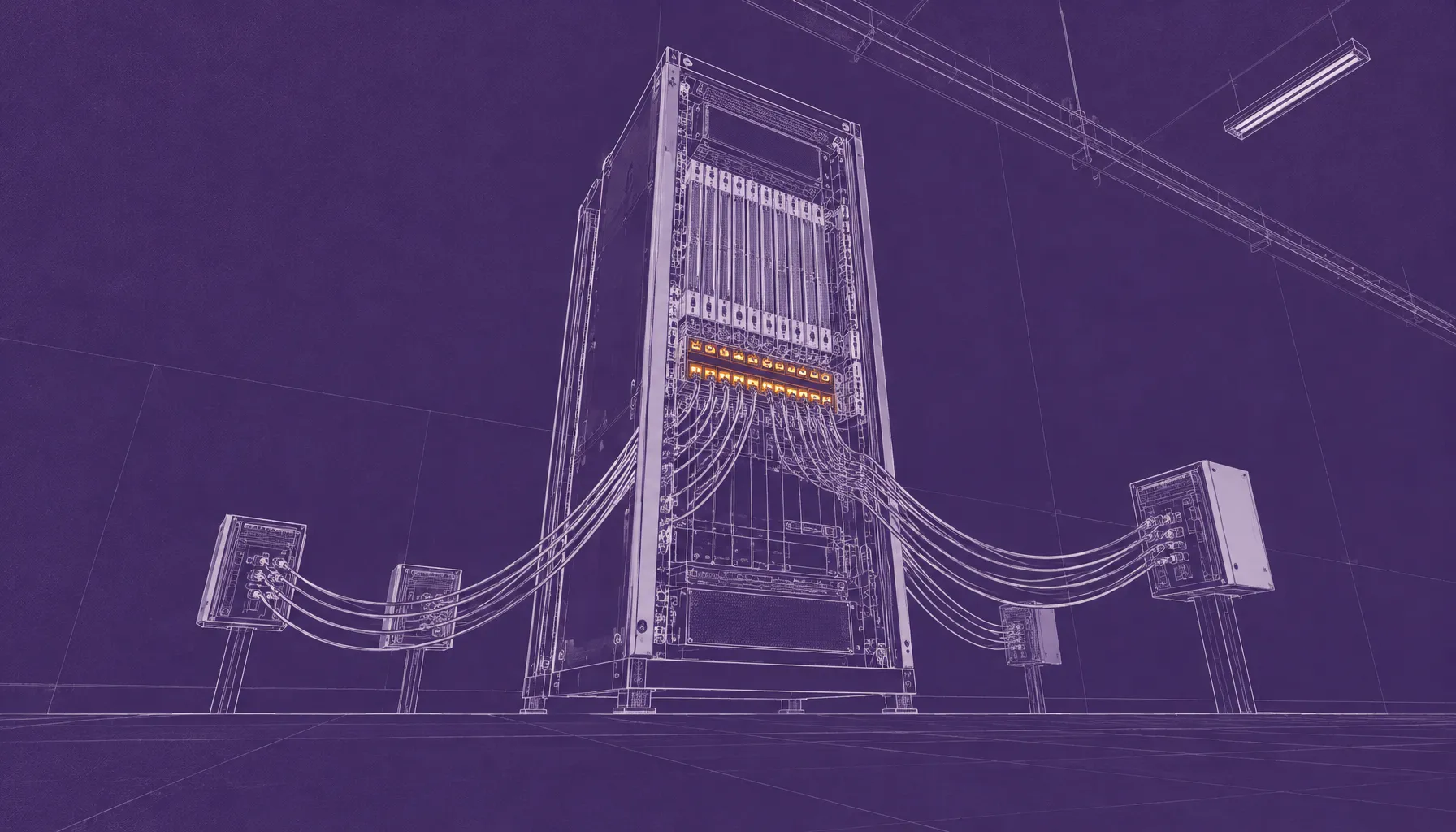
Toshiba launched its Quantum-Safe Networking platform on October 21, combining quantum key distribution, post-quantum cryptography and network-management tools. Its optical-switching hub is designed to connect hundreds of remote sites while
Quantum.world Team · Written with AI · fact-checked ·
“The quantum-safe transition represents the largest cryptographic transformation in history. A transformation of that scale cannot happen overnight.”
Hiroshi Tsukino, Vice President, ICT Solutions Division, Toshiba Corporation
Toshiba launched its Quantum-Safe Networking (QSN) Platform on October 21, pitching it as a way for network operators, data-center providers, companies and public agencies to add quantum-safe protection without rebuilding their networks. The system combines interoperable equipment with centralized management and is intended to grow from a protected connection into metro, hub-and-spoke, ring, mesh or long-distance networks.
The launch centers on a change in network design: instead of requiring dedicated point-to-point equipment for each connection, Toshiba’s QSN Hub uses active optical switching to connect multiple remote locations from a central system. The company says one hub can serve hundreds of sites, reducing equipment, power use and space compared with conventional point-to-point deployments. Toshiba did not publish a measured comparison of those savings.
One hub, hundreds of remote sites
The product family includes QSN Transceiver 1550/1310, which combines quantum transmit and receive functions in one chassis and operates at either a 1550-nanometer or 1310-nanometer quantum wavelength. QSN Spoke provides a compact endpoint for remote locations, while QSN Link supports dedicated point-to-point quantum key distribution (QKD) connections with separate transmitter and receiver components that can be reused as networks change.
A QSN Multiplexer is designed to carry quantum channels, QKD service channels and third-party dense wavelength-division multiplexing data traffic over existing lit fiber. Toshiba says that arrangement can avoid the need for dedicated dark fiber. The release also describes a Key Delivery System integrated into QKD appliances, a standalone Key Management System for industry-standard x86 servers, and a controller for centralized network configuration.
QKD and post-quantum cryptography share the platform
The platform brings together post-quantum cryptography (PQC), QKD and quantum random number generation (QRNG). PQC uses cryptographic algorithms designed to resist attacks from future quantum computers; QKD uses quantum technology to distribute keys. Toshiba says organizations can choose protections according to their applications and operating environments, including QKD, PQC and hybrid key delivery.
That combination gives operators options across software and specialized network equipment rather than requiring one protection method for every connection. Toshiba also says its key-delivery layer supports automatic rerouting and different key-exchange mechanisms, allowing the network to adapt when requirements change. Its broad statements that the quantum technologies withstand future computational attacks and are unaffected by AI-assisted searches for cryptographic weaknesses are company claims; the launch announcement does not provide independent test results.
A staged migration, not a network replacement
Toshiba frames the platform as a way to protect selected, sensitive data paths first and add sites over time. The approach addresses the “harvest now, decrypt later” risk: an adversary could store encrypted traffic now in hopes of decrypting it with future computing capabilities. Toshiba argues that organizations can begin the transition using existing infrastructure rather than waiting for a complete network rebuild.
Hiroshi Tsukino, Toshiba’s vice president of ICT Solutions, said organizations need to start protecting critical networks while preparing to extend that protection as threats and standards change. Toshiba says it plans to expand the platform with telecommunications providers, data-center operators and other critical-infrastructure providers across EMEA, North America and APAC. The announcement gives no pricing, measured deployment savings or named customers for the new platform; its clearest scale claim is that one QSN Hub can serve hundreds of remote sites.