The Signal
Sloan and Sipe Model Cleaner Squeezed Light With Coupled Rings
M. Sloan and J. E. Sipe model how a second microring resonator could suppress noise in squeezed light or improve the alignment of the process that generates it. Their analysis uses a five-resonance approximation and describes a theoretical
Quantum.world Team · Written with AI · fact-checked ·
Coupled rings could reduce noise without sacrificing squeezing
Squeezed-light sources face a design conflict: the interactions that generate the desired quantum state can also produce unwanted light that adds thermal noise. M. Sloan and J. E. Sipe propose using a second microring resonator to reshape those interactions, targeting cleaner squeezed light while preserving the process that creates it. Their study appeared in Physical Review A on October 26, 2026.
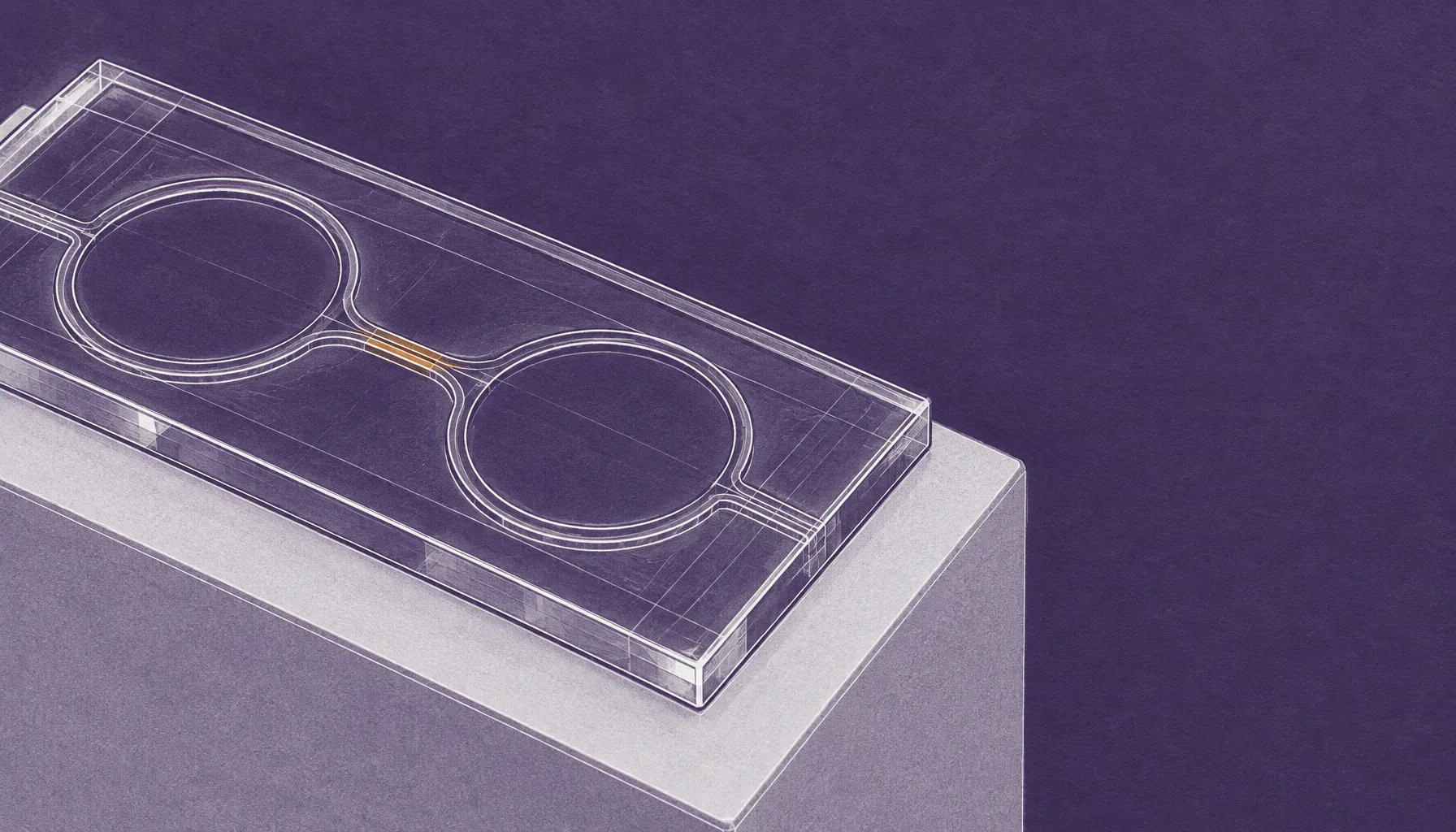
The authors model two coupled rings, a structure they describe as a two-ring photonic molecule. Interference between light circulating in the rings changes the resonance spectrum near a shared resonance. In a dual-pump, degenerate squeezing scheme, that shift can separate unwanted resonances from the desired process—or reposition a pump resonance to improve its alignment.
“For sufficiently strong coupling between the resonators, we demonstrate near-complete suppression of such parasitic processes, resulting in near-unit fidelities with the corresponding output state that would arise were the parasitic interactions neglected.”
M. Sloan and J. E. Sipe, the paper’s authors, write
Splitting resonances blocks parasitic mixing
The first approach addresses parasitic four-wave mixing. In this nonlinear optical process, interacting photons generate additional frequencies; in the modeled scheme, unwanted mixing contributes thermal noise to the intended degenerate squeezed state. Coupling the auxiliary ring to the primary one effectively splits the resonances that support those parasitic interactions.
Sloan and Sipe report that sufficiently strong coupling nearly suppresses the unwanted processes. Their fidelity comparison is with the output state that the model would produce if those parasitic interactions were absent. It is not a measurement of a fabricated source, nor does the paper’s abstract give a laboratory squeezing result in decibels.
The auxiliary ring also tunes the pump
The second approach uses the same resonance hybridization to compensate for group-velocity dispersion in the primary resonator. Dispersion shifts the frequencies at which the optical modes resonate, making it harder to align the pumps with the desired four-wave-mixing process. The auxiliary ring shifts a pump resonance back toward alignment, which the authors say significantly enhances signal generation and output squeezing.
The two effects serve different purposes: splitting unwanted resonances can limit noise, while shifting a pump resonance can improve the desired interaction. Both arise from adjusting the coupled rings’ shared spectrum, rather than treating each unwanted frequency as an isolated filter problem.
A five-resonance model, not a device demonstration
The results come from a nonperturbative theoretical description of squeezed-light generation in lossy structures, applied here under a five-resonance approximation. The authors frame the method for arbitrary lossy systems with multiple coupled microrings, but the reported analysis focuses on two-ring structures. The publication describes a model, not a built photonic chip or an experimental test.
That distinction sets the result’s reach. Near-unit fidelity describes how closely the modeled output approaches an idealized state without the parasitic interactions; it does not establish that a real source will attain that performance once fabrication variation, operating conditions and other losses are included. The specific proposal to test is whether coupled-ring resonance control can deliver both noise suppression and stronger squeezing in an operating device.