The Signal
SEEQC Reports 50% QEC Gains in a Simulated Decoder Stack
SEEQC says a simulated architecture combining its chip-based pre-decoder with NVIDIA Ising reduced decoding latency and improved logical-error performance by approximately 50% compared with NVIDIA Ising used alone as a pre-decoder. The comp
Quantum.world Team · Written with AI · fact-checked ·
SEEQC said on October 22 that a simulated quantum processor stack combining its chip-based pre-decoder with NVIDIA’s Ising decoder reduced decoding latency and improved logical-error performance by approximately 50%. The comparison was against NVIDIA Ising operating as a standalone pre-decoder. The result comes from a simulation, not a demonstration on a running quantum processor.
A chip-based pre-decoder works as an Ising backend
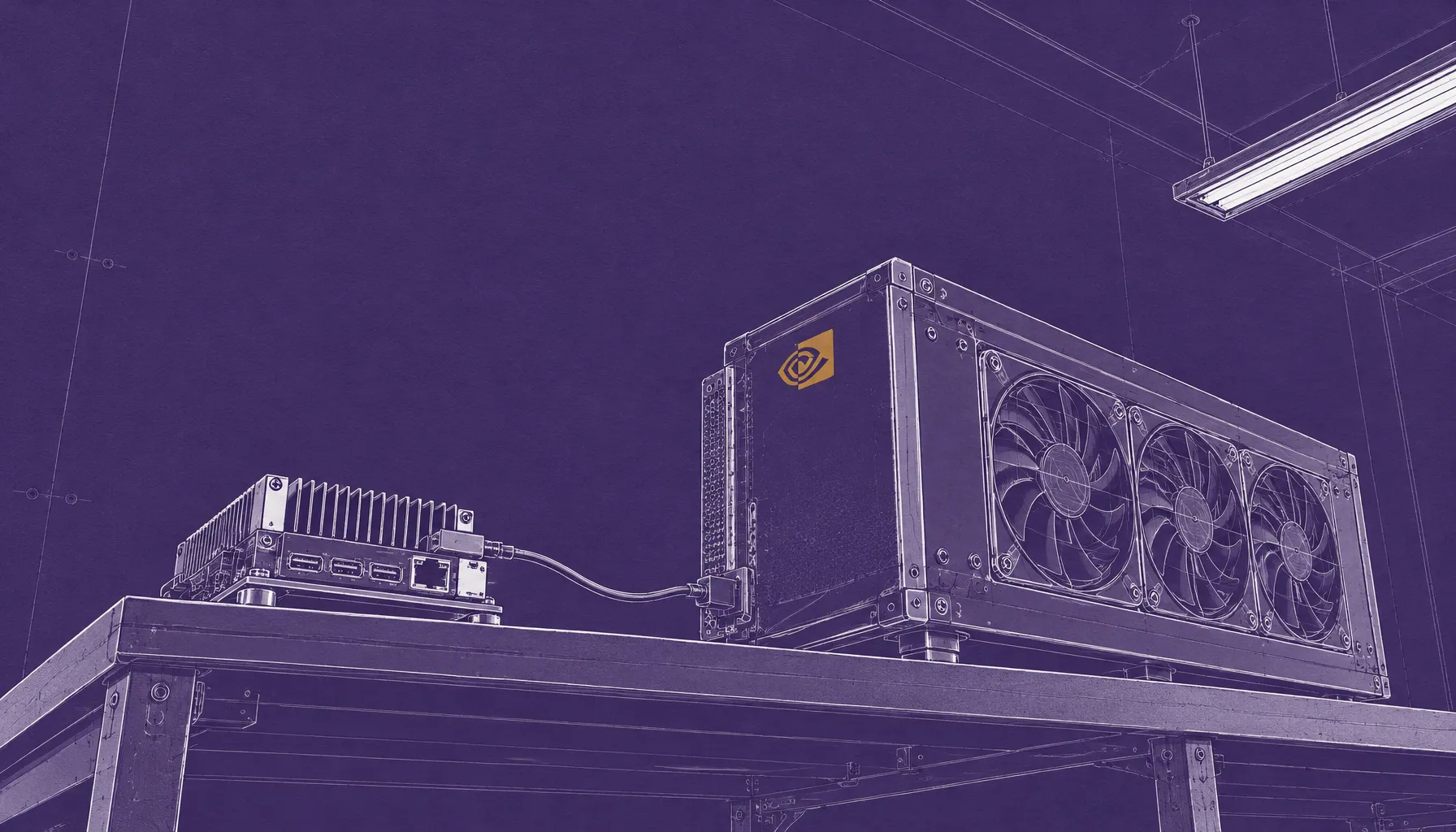
SEEQC’s chip-based pre-decoder was integrated as a backend to NVIDIA Ising Decoding in the simulated architecture. SEEQC Digital Link and NVIDIA NVQLink provide the framework for communication between quantum processing and GPU-accelerated computing, the company said.
The announcement describes a simulated processor and system stack designed to incorporate realistic decoder latency at scale. It does not identify the quantum processor hardware used in the simulation, specify a code or noise model, or give raw latency and logical-error figures. That leaves readers without enough detail in the release to independently assess how the reported percentage would translate to a particular processor or operating regime.
The comparison is against Ising alone
SEEQC characterizes the reported improvement as applying to two measures: decoding latency and logical-error-rate performance. NVIDIA director of quantum product Sam Stanwyck said the chip-based pre-decoder helped achieve “faster decoding and fewer logical errors.” The release does not publish a benchmark table or explain the precise calculation behind the approximately 50% figure.
The comparison matters: the company is not claiming a 50% improvement over every decoder or every quantum-computing system. It reports a gain over NVIDIA Ising used as a standalone pre-decoder in the simulated stack. Nor does the result establish that the full system requires half the hardware, energy or operating time.
SEEQC frames decoding as a system problem
Quantum error correction relies on classical processors to interpret measurement outcomes and determine corrections. As a processor grows, the amount of information that must be handled can increase, and delays in decoding can burden the feedback cycle. SEEQC’s approach places specialized processing closer to the quantum processor and sends less information to higher-level classical resources, according to the company.
“Quantum error correction is fundamentally a systems challenge, where latency, data movement and logical error performance all become increasingly critical as quantum processors scale,” said Matt Hutchings, Chief Product Officer of SEEQC.
He said the company combined its digital pre-decoder and Digital Link with NVQLink and NVIDIA Ising in the multi-stage architecture.
The next test is chip-to-chip integration
SEEQC says its next step is to integrate the demonstrated system components and work toward chip-to-chip integration of a quantum processor within advanced high-performance computing infrastructure. The company also says it will evaluate other ways to improve error correction and hybrid quantum-classical workloads.
For now, the approximately 50% result is a company-reported simulation comparison with one stated baseline. The release describes a potential route to reducing decoding overhead, but a hardware demonstration and fuller benchmark details would be needed to show how the gains hold up on a physical processor.