The Signal
Researchers Report Dephasing Can Enhance the Non-Hermitian Skin Effect
A photonic quantum-walk experiment found that dephasing can preserve and enhance the non-Hermitian skin effect, even in the fully incoherent regime. The effect of amplitude damping depended on whether it was applied before or after the non-Hermitian loss operator.
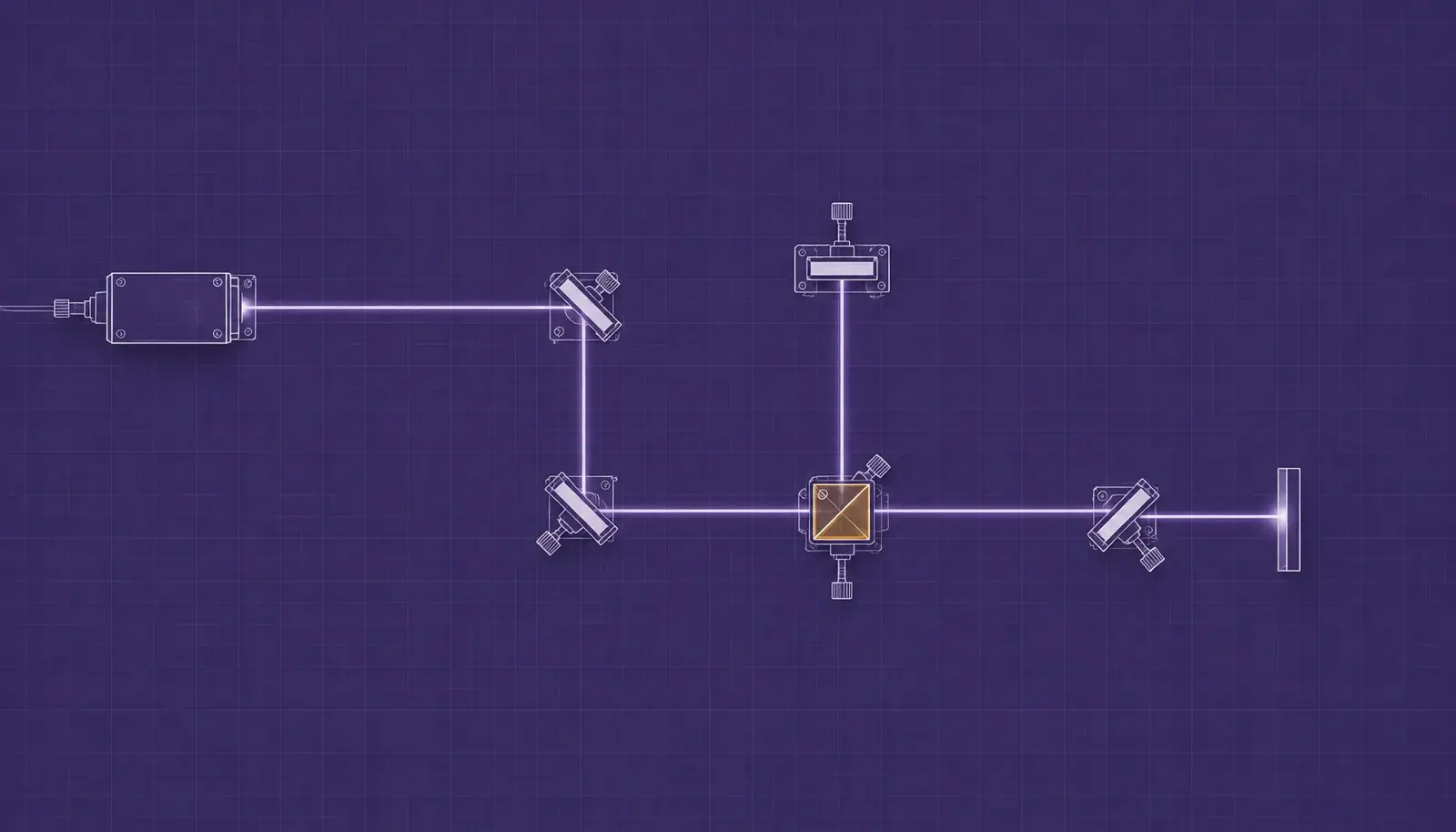
Dephasing can enhance the non-Hermitian skin effect
In photonic quantum walks, researchers found that the non-Hermitian skin effect survived dephasing up to the fully incoherent regime. They also observed that dephasing could enhance the effect, producing drift velocities higher than those of coherent dynamics. Nature Communications published the study on 6 November 2026.
The experiment tested two forms of decoherence
The researchers used two tunable decoherence channels: dephasing and amplitude damping. Their study addresses whether directional bulk-to-boundary transport associated with the non-Hermitian skin effect can persist, be enhanced or be hindered by decoherence. As the authors write, “Decoherence and dissipation, arising from interactions with the environment, can exert a dual influence on transport in physical systems, suppressing coherent propagation while inducing diffusion and mitigating localization in disordered systems.”
The authors describe non-Hermitian physics as a distinct case in which structured dissipation induces directional bulk-to-boundary transport. Their experiment examined how that transport responded to the two decoherence channels, rather than treating decoherence as having one uniform effect.
Amplitude damping’s effect depended on its order
Unlike the result for dephasing, amplitude damping had a pronounced order dependence relative to the non-Hermitian loss operator. When applied before that operator, amplitude damping suppressed the skin effect and ultimately eliminated it in the fully incoherent limit. When applied afterward, the effect persisted and could be enhanced at sufficiently large loss strengths.
The findings connect quantum and classical non-Hermitian dynamics
The authors say the work bridges quantum and classical non-Hermitian dynamics and demonstrates the resilience of the skin effect to decoherence. Their results also point to the possibility of using decoherence to enhance directional transport in noisy, nonequilibrium systems. The paper’s authors are Kunkun Wang, Lei Xiao, Stefano Longhi and Peng Xue.
Source
Related stories
- Hartree Theory Fails for Some Non-Hermitian Boson Dynamics
- Photonic Quantum-Walk Chip Shows Integer Mixed-State Uhlmann Winding Numbers
- Fixed-Basis Snapshots Recover Hidden Quantum Transport
- Study finds reverse annealing can work despite decoherence
- Superconducting Qubit Experiment Shows Postselection Breaks Linearity