The Signal
PsiQuantum Reports 1.2 dB Loss in AI Optical-Switch Demo
PsiQuantum unveiled an 8×8 optical circuit switch built on its silicon photonics platform, reporting typical insertion loss of 1.2 dB in company lab tests. The company is sharing demonstration samples with selected prospective customers as
Quantum.world Team · Written with AI · fact-checked ·
An 8×8 switch built for data-center links
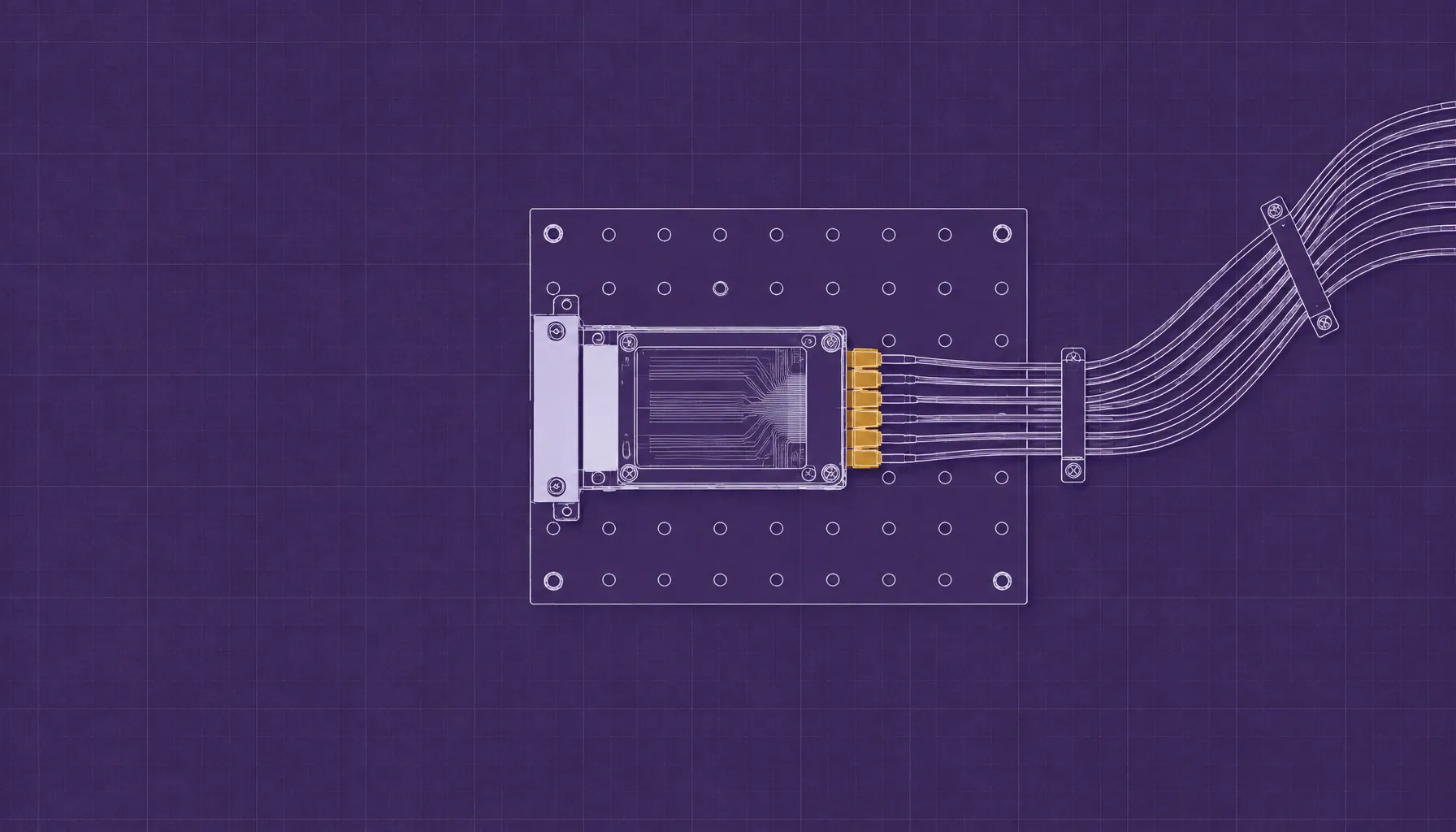
PsiQuantum says its newly unveiled optical circuit switch recorded typical insertion loss of 1.2 decibels in company lab tests, without optical amplification. The 8×8-radix demonstration device also showed 40 dB of crosstalk and reconfigured in less than 3 milliseconds, according to the company’s October 28 announcement. Those figures are test results for a demonstration vehicle, not performance figures from a commercial deployment.
The company describes the switch as an application of the low-loss silicon photonics platform it has spent nearly a decade developing for utility-scale quantum computing. Optical circuit switches route light between network connections, a function that PsiQuantum says could help address data movement demands as AI systems link increasingly large pools of computing resources. The announcement does not specify throughput, power consumption or the number of ports in a planned commercial product.
PsiQuantum says customer samples are going out
PsiQuantum is sharing samples of the demonstration vehicle with selected prospective customers while it advances the platform toward commercial products. The company says it expects to announce those products in the coming months, but has not given a product launch date or named customers. Its announcement describes the reported measurements as results from its own labs; it does not include independent test results.
CEO Victor Peng cast the switch as a way to apply technology developed for quantum computing to a nearer-term networking market. “This opportunity exists because we chose to solve the hardest scaling problems at the beginning of our roadmap to utility-scale quantum computing,” Peng said. He added that the company now has “an opportunity to put our state-of-the-art technology to work today” while continuing to pursue fault-tolerant quantum computers.
The 1 dB headline and the 1.2 dB test result
PsiQuantum’s announcement headline says the technology has loss “as low as 1 dB,” while its account of testing gives 1.2 dB as the typical insertion-loss result. The distinction matters: the company presents 1 dB as a low-end figure, not as the typical measured result. It says all three reported results exceeded the devices’ initial targets and were achieved without amplification.
For AI network operators, insertion loss is one part of whether an optical switch can fit into a larger system. Crosstalk and reconfiguration time also matter, but the announcement supplies no comparison against another switch, no test conditions, and no customer deployment data. The reported figures therefore establish what PsiQuantum says its prototype achieved in its labs, not yet how it performs in a working data-center network.
Barium titanate is not in this demonstration
PsiQuantum separately says it has developed barium titanate integration at the 300-millimeter wafer scale and uses a 64×64 barium titanate switch in its quantum systems. The material is not part of the AI-switch demonstration vehicle or the initial products described in the announcement. PsiQuantum says the current device instead demonstrates the performance of its underlying silicon photonics platform, while leaving barium titanate as a possible route to faster future products.
The next concrete test is whether prospective customers find the prototype’s loss, crosstalk and switching time useful in their networks. PsiQuantum has not yet disclosed a commercial product specification or customer trial results; it says samples are now being shared with selected prospective customers.