The Signal
Pitt Wins $4.385 Million for Quantum Cancer-Imaging Research
The University of Pittsburgh and UPMC Hillman Cancer Center announced a two-year ARPA-H award to test whether entangled photons produced during radiation therapy can reveal tumor biology. ARPA-H lists the QTX project at up to $4.8 million,
Quantum.world Team · Written with AI · fact-checked ·
Two public figures, one Pitt-led project
The University of Pittsburgh and UPMC Hillman Cancer Center say they received a two-year, $4.385 million award from the Advanced Research Projects Agency for Health (ARPA-H), announced on October 27, 2026. ARPA-H’s award directory lists the same QTX: Quantum Theranostics project under the University of Pittsburgh, but gives an amount of “up to $4.8M.” The pages do not explain the difference between the reported award and the agency’s listed maximum.
The project formally launched at Pitt on October 14, according to UPMC. ARPA-H lists September 29 as the award’s start date, a separate milestone from the public launch and announcement. The work is led by Mohammed Saiful Huq, director of medical physics in the Department of Radiation Oncology at Pitt and UPMC Hillman; Heath Skinner, the department’s professor and chair, is a co-investigator.
The experiment starts with photons from treatment
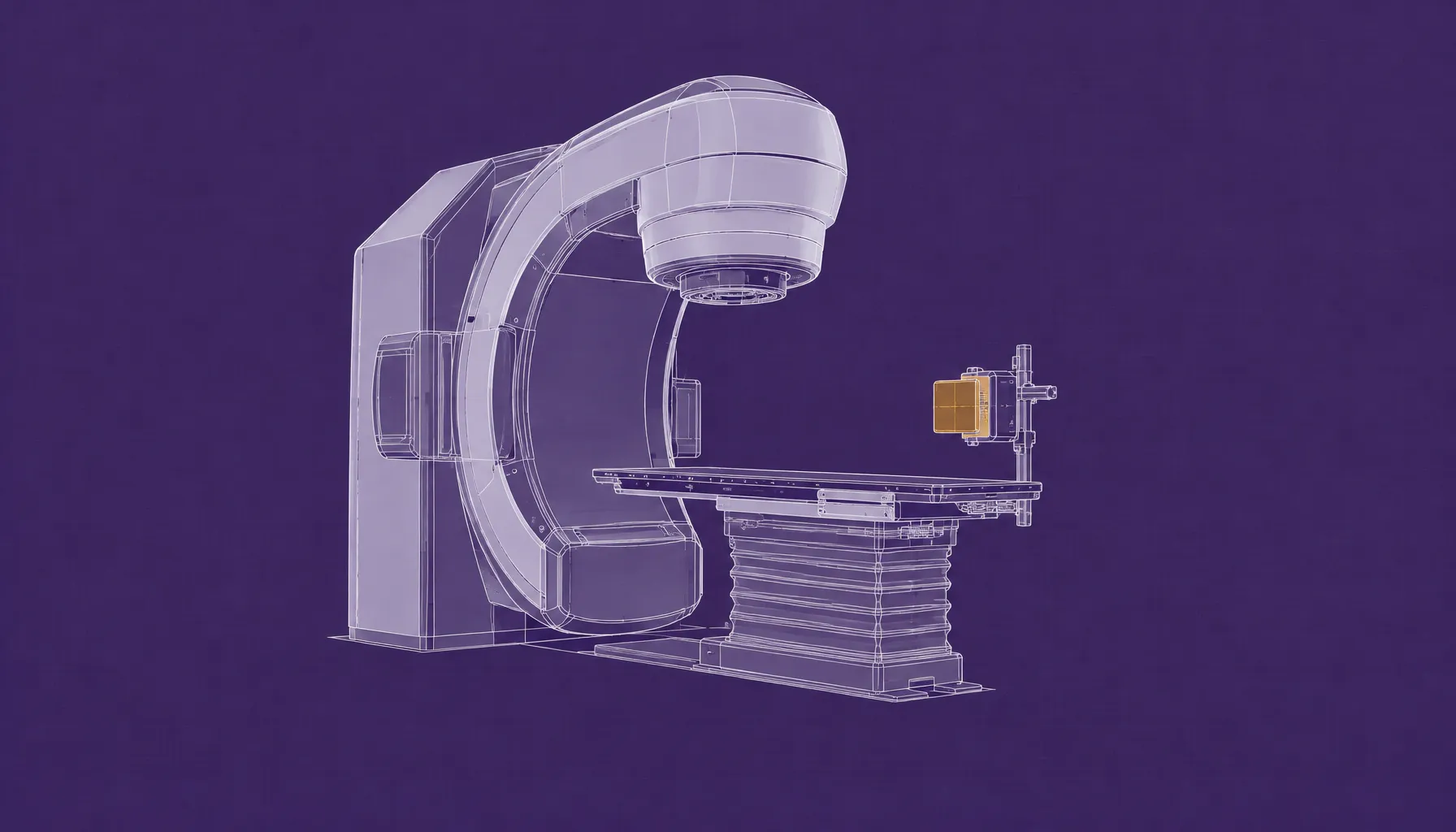
The team will study whether photon pairs produced during radiation therapy show quantum entanglement that can carry information about a tumor and the tissue around it. The planned work brings together computational modeling, detector technology and radiation oncology devices to measure those signals. The proposed imaging would draw on particles generated during treatment rather than rely only on conventional images acquired separately.
Huq described the immediate task in deliberately limited terms: “We are now asking whether quantum physics can provide an entirely new source of information about cancer. Our immediate goal is to prove the science.” UPMC says any real-time tumor or microenvironment information is a possible later use, conditional on demonstrating the underlying science. The announcement does not report a working imaging system or patient results.
A multi-university team, with an industry partner
Pitt and UPMC Hillman will work with the University of Pennsylvania, UMass Lowell and Quantum Theranostics, Inc. The University of Pennsylvania team is led by Steven Avery; UMass Lowell’s work is led by Erno Sajo and Hugo Ribeiro. Quantum Theranostics is the industry partner, led by chief executive Gustavo H. Olivera and chief scientific officer Bashkim Ziberi.
ARPA-H’s project directory describes QTX as an effort to combine quantum imaging and therapy, with a proposed compact, low-cost system intended for cancer, heart disease and other uses. Those are project aims, not demonstrated capabilities. UPMC says the award is the first direct ARPA-H research award to Pitt’s Department of Radiation Oncology.
Proof of signal comes before clinical use
The central test is whether entanglement measurements from radiation-generated photons can provide biologically meaningful information that standard imaging misses. A positive result could give researchers a basis for exploring images of tumor surroundings during treatment and, eventually, adapting radiation therapy to information gathered as it is delivered. Neither institution’s announcement says when such a capability could reach clinical testing.
For now, the award funds an investigation into the physics and measurement systems needed to establish whether that information exists. Huq’s stated first milestone—proving the science—sets the boundary between the funded research and the potential clinical applications described by the institutions.