The Signal
Optical Experiment Recovers 10.3% of Lost State Purity
A team used quantum state smoothing on an optical parametric oscillator to improve estimates of its hidden quantum state. The experiment reported 10.3% recovery of available state purity and 7.6% recovery of available squeezing.
Quantum.world Team · Written with AI · fact-checked ·
Two detectors track one optical cavity
On October 21, researchers reported an optical experiment that used later measurement records to improve estimates of a quantum system’s earlier state. The team applied quantum state smoothing to an optical parametric oscillator, recovering 10.3% of the available state-purity improvement and 7.6% of the available squeezing improvement.
The result addresses a limit of ordinary quantum-state tracking. A causal filter estimates a system from measurements already made; information lost to the environment leaves the estimate less pure. Smoothing instead uses measurement records from both before and after the time being estimated, allowing a more informed reconstruction after the fact.
“If real-time tracking is not required, the lost information can be maximally extracted via acausal quantum state smoothing, which has been theoretically proven to better restore the system’s coherence (purity) than causal filtering,” write Shota Yokoyama et al. in “Quantum state smoothing for tracking optical quantum dynamics and recovering purity and squeezing.”
The recovery is an estimate, not a physical repair
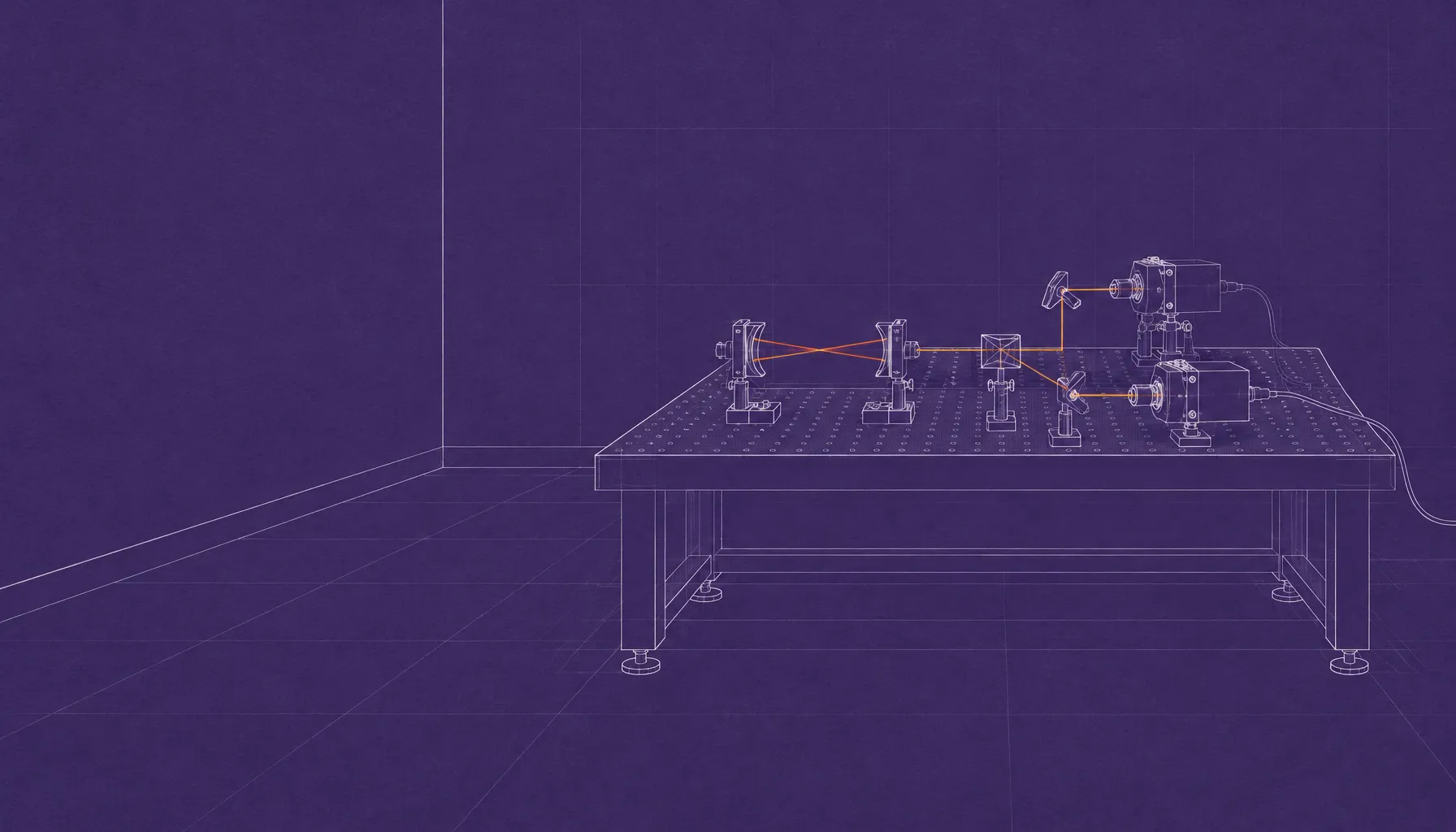
The experiment used an optical parametric oscillator, a cavity that generates squeezed light. Researchers divided its output beam between two homodyne detectors, creating separate measurement channels. In the paper’s framing, one channel supplies the record available to the estimator, while the other represents information that would otherwise be hidden in the environment.
That distinction matters: smoothing does not send information back into the cavity or physically reverse decoherence. It improves the reconstructed description of the state using additional records collected later. The authors compare the smoothed estimate with the hidden state inferred using both channels, and report that the smoothed states are better estimates than those produced by conventional filtering.
What the percentages measure
The headline figures describe fractions of the improvement that was available in the experiment, not absolute increases of 10.3% in purity or 7.6% in squeezing. For purity, the maximum measured recovery was 0.016 ± 0.003, equal to 10.3% ± 1.6% of the gap between the filtered estimate and the true state. For conditional squeezing, the maximum recovery was 0.006 ± 0.002, or 7.6% ± 2.6% of the available gap.
Those gains depended on the measurement settings in both channels. The researchers tested different homodyne measurement angles and found that the amount of recovery varied with the choices made for each detector. The results therefore show an experimental benefit under specified measurement conditions, not a fixed improvement that applies to every quantum system or measurement.
Why post-processing changes the picture
Quantum state smoothing is useful only when an estimate can wait for later data. That makes it distinct from real-time tracking, where an operator must act using information available at that moment. The method also relies on assumptions about how information inaccessible to the observer is converted into measurable records by the environment—a condition the paper identifies as part of the smoothing problem.
The experiment demonstrates that, in this optical system, later records can refine estimates of earlier quantum dynamics and recover part of the purity and squeezing lost in a filtered description. Its practical reach will depend on whether a system’s records and environmental model support the same kind of retrospective analysis.