The Signal
NIH Opens Registration for $7.1 Million QuSAFE Challenge
NIH opened registration on October 25 for QuSAFE, a $7.1 million competition to develop quantum-enabled sensing prototypes for preclinical safety testing. The challenge seeks measurements in human-cell laboratory models that could improve d
Quantum.world Team · Written with AI · fact-checked ·
The National Institutes of Health opened registration on October 25 for QuSAFE, a competition offering up to $7.1 million for sensing systems aimed at preclinical drug-safety research. The challenge was announced on September 15 by the National Center for Advancing Translational Sciences, or NCATS, as part of NIH’s Quantum Biomedical Innovations and Technologies program. It seeks proof-of-concept and prototype systems that use quantum sensing, alone or alongside other advanced methods, in laboratory models that do not rely on animal testing.
QuSAFE targets signals in human-based lab models
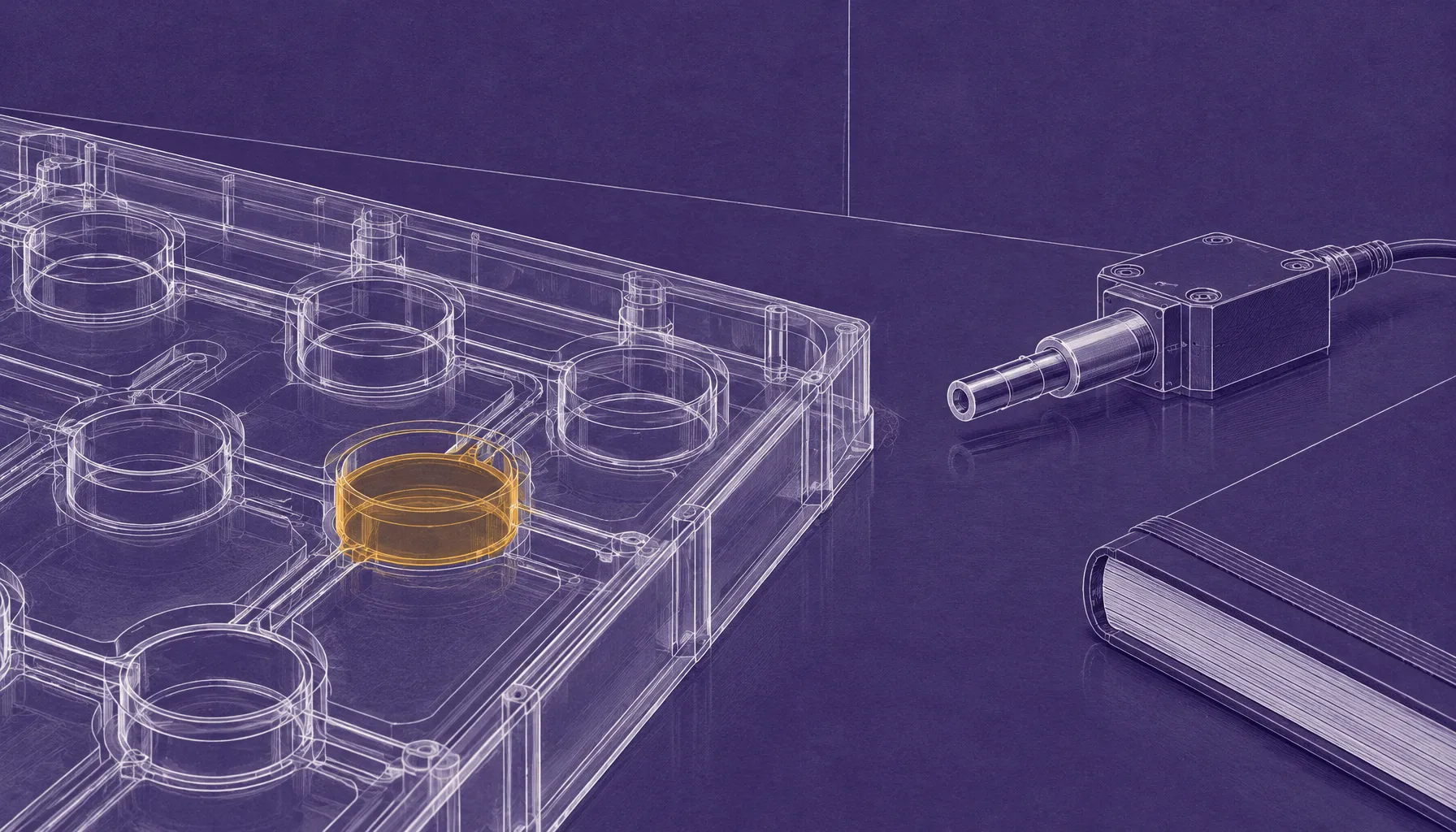
NIH’s target is measurement in new approach methodologies, or NAMs, including human-based in-vitro platforms such as organ-on-a-chip and microphysiological systems. The agency wants teams to detect biological signals tied to toxicity, safety, drug response and other preclinical endpoints. Examples in the challenge include metabolic stress, barrier integrity, inflammation, electrophysiology and pharmacokinetics or pharmacodynamics.
Proposals must include at least one quantum-enabled sensing modality; purely computational or AI-based submissions without experimental sensing are out of scope. NIH is seeking systems built around existing quantum-enabled technologies, with the competition focused on integration and demonstration rather than creating foundational sensing technologies from scratch. Entrants are expected to compare performance with conventional approaches and address measures such as sensitivity, signal-to-noise ratio, spatial or temporal resolution, repeatability and compatibility with existing laboratory workflows.
The $7.1 million is divided across two stages
NCATS anticipates awarding up to $500,000 in Stage 1, which covers planning and proposed proof-of-concept work. Up to 25 winners may receive as much as $20,000 each. Stage 1 submissions are due July 27, 2027, and NIH expects to announce winners in November 2027.
Stage 2 accounts for up to $6.6 million and is organized around prototype demonstrations. NIH expects to award up to $3 million at the initial-progress milestone, with up to 15 winners receiving as much as $200,000 each. For the final demonstration, the listed awards are up to $460,000 for each of six runners-up and up to $840,000 for one grand-prize winner.
Stage 1 participation is not required to enter Stage 2, which is described as open to all participants. The first Stage 2 submission period is scheduled to open in December 2027; the initial demonstration deadline is July 2028, and the final prototype deadline is November 2029. NIH plans to announce the runners-up and grand-prize winner in March 2030.
Teams and organizations can register now
Individuals cannot enter on their own, but may participate as members of a team or an entity. A team lead registers for a group, while an organization names a designated point of contact. To receive a monetary prize, a private entity must be incorporated and maintain its primary place of business in the United States; a team’s lead must be a U.S. citizen or permanent resident.
Federal grant recipients may participate, but they cannot use grant funds to develop a submission unless that use is consistent with the award’s terms. The challenge also requires participants to carry liability insurance or demonstrate financial responsibility of $250,000. A technical-assistance webinar is scheduled for November 30, ahead of the Stage 1 proposal period opening on December 31.
NIH is asking for demonstrated gains, not just a sensor concept
Stage 1 proposals must lay out a target biological use case, a sensing approach and a plan for testing and benchmarking it. Stage 2 teams must show a functioning prototype in a relevant in-vitro model, along with evidence of measurable performance and a workable laboratory process. NIH says the evaluation will consider whether improved measurements can make preclinical models more predictive; the challenge itself does not establish that any proposed system will do so.
The immediate deadline is the Stage 1 proposal period opening on December 31, 2026. The application deadline follows on July 27, 2027.