The Signal
LTM adds AI-QEM to IBM’s quantum functions catalog
LTM’s AI-QEM error-mitigation function is now listed in IBM’s Quantum Functions Catalog for eligible users. IBM’s documentation describes a Heron-only beta function that uses classical inference and applies mitigation selectively.
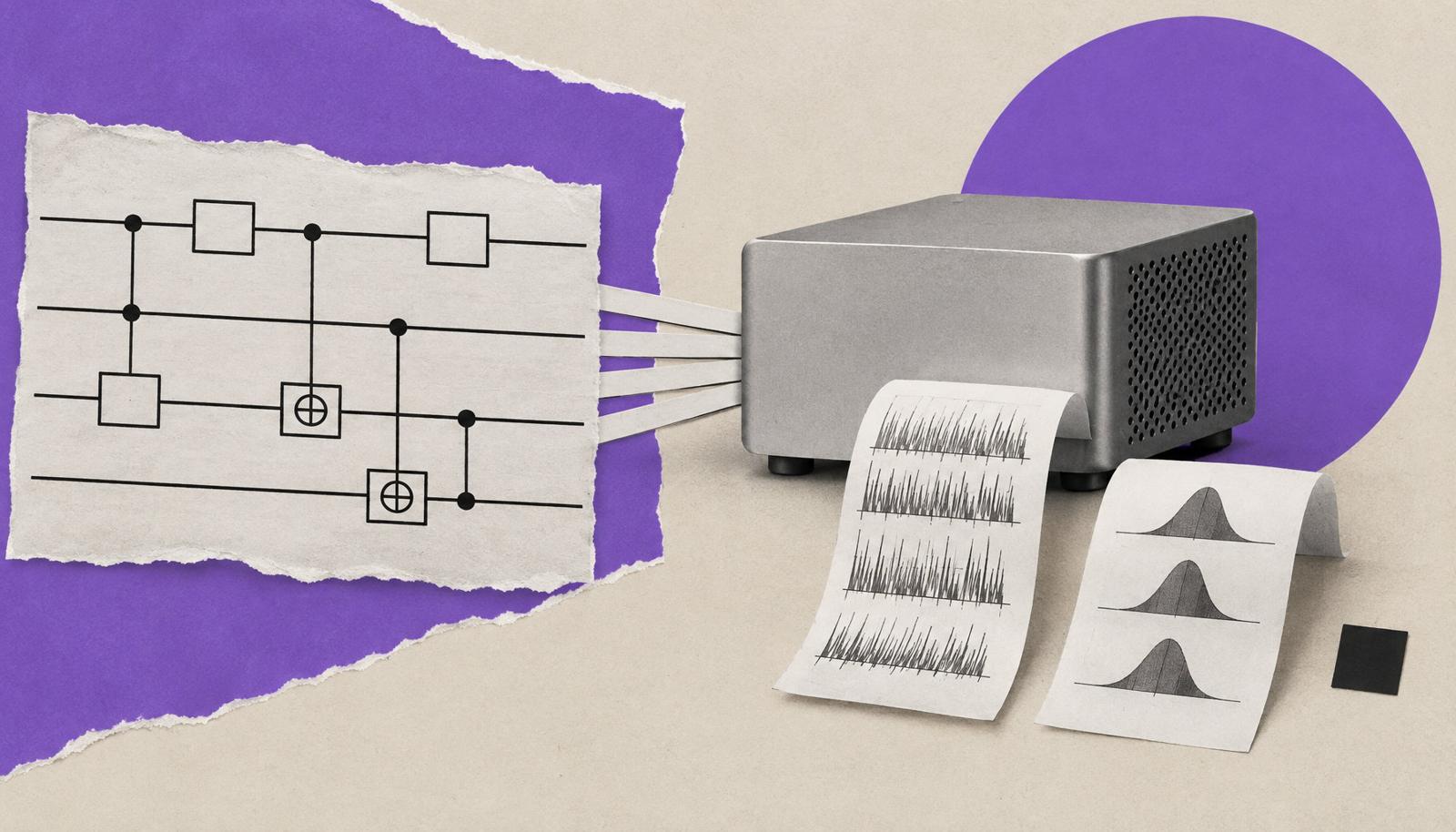
Available through IBM’s catalog
LTM’s AI-QEM error-mitigation function is now available in IBM’s Quantum Functions Catalog for users with eligible IBM Quantum access plans. The function can be used in Qiskit workflows, according to LTM’s announcement on November 12, 2026.
Source ltm.com
LTM describes the release as the first time a global systems integrator has published a function in the catalog. That “first” claim comes from the company. IBM’s catalog lists AI-QEM as a circuit function and says users can enable catalog functions through Premium or Flex Plan instances.
Classical processing for corrections
IBM’s documentation says AI-QEM uses a deep neural network with a graph convolutional network and Transformer architecture. It takes account of circuit structure, processor topology, measured observables and qubit calibrations to predict correction factors for noisy expectation values.
LTM says the system learns device-specific error patterns and applies corrections through classical post-processing. The IBM catalog says this inference requires no additional mitigation-specific quantum processing unit runs; IBM’s documentation also says the function uses the same QPU time as its Estimator primitive.
LTM reports that it validated the capability on IBM Quantum computers across circuit sizes and complexities, including experiments involving more than 100 qubits.
Current operating limits
IBM’s documentation says the current release supports only the Heron processor family, with support for other backends planned for future versions. Quantum Functions are a beta feature available to IBM Quantum Premium Plan, Flex Plan and On-Prem users through the platform API.
The function also applies mitigation selectively: IBM says it runs only when the absolute noisy expectation value is at least 0.1. The documentation says that condition is intended to limit mitigation to cases where it is expected to provide a meaningful benefit.
Sources
Companies in this story
Related stories
- IBM VQE Tests Find Error Bars Missed Energy Residuals by Up to 32×
- IBM says million-round repetition code can run in one circuit
- SQD Recovers FeO Model Ground States from IBM Quantum Samples
- Researchers’ Hypergraph Matcher Cuts Qiskit Runtime by 606×
- Qiskit 2.6 Brings Custom Compiler Passes to Its C API