The Signal
Horizon Quantum and OQC Integrate Toshiko with Triple Alpha
Horizon Quantum and OQC announced pulse-level integration of OQC’s 32-qubit Toshiko quantum processor with Horizon Quantum’s Triple Alpha development environment. The integration supports qubit characterization and gate calibration alongside quantum application development and execution.
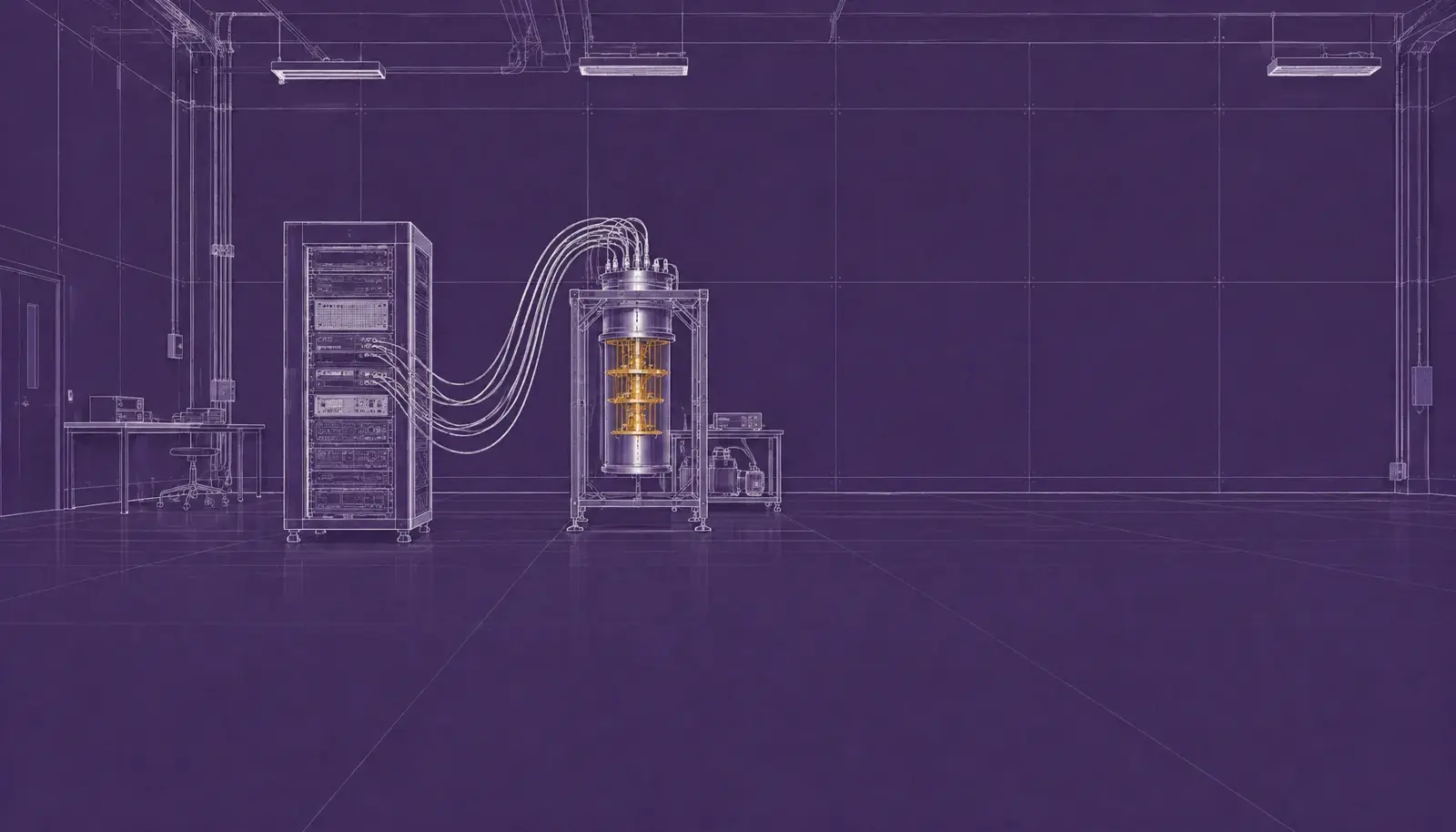
Pulse-level access to OQC’s 32-qubit device Toshiko
On November 9, 2026, Horizon Quantum and OQC announced the successful pulse-level integration of OQC’s quantum processing unit (QPU) with Triple Alpha, Horizon Quantum’s integrated development environment. The companies described the work as part of an ongoing collaboration. The integration provides access to the hardware control layer, allowing Triple Alpha users to perform pulse-level operations on OQC’s 32-qubit device Toshiko. Users can build hardware characterization and gate calibration procedures in the same environment they use to develop and execute quantum applications.
Characterization and calibration on a QPU
Characterization is a step in preparing quantum hardware for practical use. Measuring a QPU’s physical properties helps build an understanding of processor behavior and informs the calibration of quantum gates. A QPU needs a universal gate set to execute quantum programs, and each gate must be calibrated. The process involves sending pulses to the processor, measuring qubit responses and adjusting the pulses to achieve the desired operations. Since quantum systems are highly sensitive, the release says frequent recalibration is necessary.
Testing parameters and calibrating gates
Horizon Quantum’s team used Triple Alpha’s pulse-level control capabilities to access OQC’s 32-qubit superconducting QPU and characterize parameters including T1 and T2. Those parameters describe qubit relaxation and phase coherence, respectively. The team also used Triple Alpha to execute a high-level quantum program on Toshiko to perform gate calibration.
The companies said the collaboration demonstrates how Triple Alpha’s pulse-level control can support characterization and gate calibration directly on a QPU. They said this could streamline workflows that might otherwise rely on separate tools.
Programming pulses within application workflows
Many quantum computing modalities, including superconducting systems, use precise electromagnetic pulses to control a QPU and drive logical operations. Pulse-level programming requires specifying the schedule for sending pulses to the QPU and the physical properties of those pulses. The release says this has traditionally required separate frameworks or programming languages designed specifically for pulse scheduling.
Triple Alpha allows developers to use pulse-level control within the programming languages they use to develop quantum applications. Its portable approach lets users write programs once and execute them across different control systems. The release says users can create and deploy characterization and calibration routines, as well as other programs that explore the physics of a QPU, and incorporate them into their workflows through a web-based API.
“Exposing pulse-level control of OQC processors through Triple Alpha will enable users to interact with the physics of the quantum processors, rather than just the data they contain,” said Dr. Joe Fitzsimons, CEO of Horizon Quantum. “We expect this to enable the development and implementation of new techniques for characterization, noise mitigation and improved performance. We are grateful to OQC for working with us to make this integration possible.”
“Making quantum computing useful requires close integration between hardware and software,” said Simon Phillips, OQC’s Chief Product Officer. “By bringing OQC's device's pulse-level capabilities into Triple Alpha, we’re giving developers greater control to characterize qubits, calibrate gates, and build quantum programs within a single environment—a practical step towards simplifying quantum application development.”
Source
Related stories
- Horizon Quantum says multiplexing cuts ZZ crosstalk characterization experiments on a 100-qubit processor from about 5,000 to 7
- Aaronson Says He Believes AI Proof of Quantum Conjecture Is Correct
- DLR researchers report shallower circuits for quantum data loading
- Photonic Quantum-Walk Chip Shows Integer Mixed-State Uhlmann Winding Numbers
- RIKEN Team Derives Entropy Increase from Quantum Mechanics